

How to Use TradingView with Deriv for Smarter Trading
📈 Learn how to connect TradingView with Deriv for smarter trading. Step-by-step setup, pro tips, and solutions for smoother trades in Pakistan.
Edited By
Henry Williams
Trading isn't just about making quick decisions these days; it’s increasingly about having the right tools at your fingertips. For traders in Pakistan and beyond, combining TradingView's advanced charting features with Deriv's user-friendly trading platform can significantly improve how you read the market and act on it. This article walks you through why this combo matters, what you need to know to get started, and some practical tips to maximize your trading effectiveness.
You might be asking, "Why bother juggling two platforms?" Well, TradingView offers detailed charts and technical analysis tools that are hard to beat. Meanwhile, Deriv provides an accessible environment to place trades without the fuss. Together, they create a setup that lets you spot opportunities quickly and execute trades with confidence.
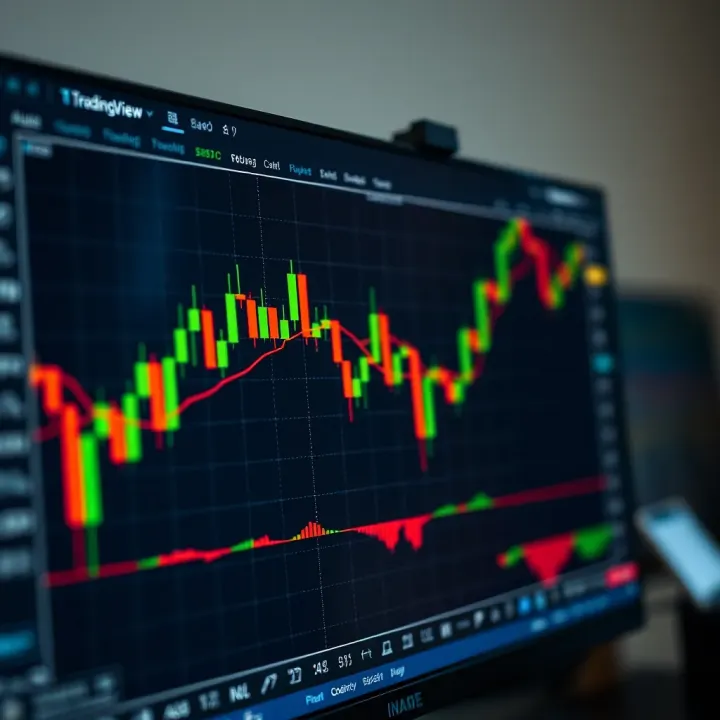
Throughout this article, we'll highlight key features, step-by-step setup instructions, and how to navigate the quirks of both platforms so you can trade smarter rather than harder. Whether you're a seasoned trader or just dipping your toes into the financial markets, understanding how to integrate these tools can give you that extra edge.
Think of TradingView as your market detective and Deriv as your action hub — one helps you see where things are headed, and the other lets you act on those insights effectively.
Let's dive into the nuts and bolts of using these platforms together to up your trading game.
For anyone serious about trading in Pakistan and across global markets, understanding both TradingView and Deriv is key. This section introduces these platforms, laying the groundwork for how their combined use can sharpen your trading edge.
TradingView is more than just charts — it’s an interactive hub that helps traders read market signals and trends more clearly. Deriv, meanwhile, acts as your actual trading interface, where you execute trades on assets like forex, CFDs, and synthetic indices. By knowing both inside out, you set yourself up for smarter, more informed trades.
TradingView offers a rich palette of chart types — from simple line charts to detailed candlestick and Renko charts — all designed to help traders spot market moves fast. One standout feature is its wide range of customizable technical indicators. For instance, a trader eyeing the Pakistan Stock Exchange could set up Bollinger Bands alongside RSI to catch potential breakouts or reversals.
Another practical advantage lies in TradingView's ability to handle multiple timeframes simultaneously, allowing you to see both the bigger picture and the nitty-gritty without hopping between tabs. This multitasking feature helps users quickly verify whether a trend on a daily chart matches what’s forming on a 15-minute chart.
TradingView's interface balances power with ease of use. The toolbar allows users to draw trendlines, Fibonacci retracements, or mark support and resistance zones effortlessly. For example, a trader can sketch a trend line on oil prices to decide the ideal entry point for a Deriv trade.
Moreover, TradingView supports social features such as sharing ideas and strategies with other traders, a plus for those who learn best by seeing what peers are doing. The platform's alert system also allows you to set notifications on price movements or indicator crossovers, so you won’t miss out on key trading windows even when stepping away from the screen.
Deriv caters to a broad spectrum of traders by offering a diverse set of instruments. Forex pairs like EUR/USD and USD/JPY are popular among Pakistani traders. Alongside these, Deriv provides CFDs on indices like the S&P 500, stocks, commodities like gold and oil, and notably synthetic indices — unique products that simulate real market movements but trade 24/7, perfect for markets always on the go.
Synthetic indices deserve a shoutout; these are especially handy when traditional markets are closed or too volatile, offering a steady playground for technical analysis-driven trading.
Deriv’s platform is designed with simplicity and flexibility. Its clean dashboard allows traders to view multiple asset prices and place trades swiftly. Features like the ability to customize contract durations—from minutes to months—and the choice between multipliers, options, or classic trades give you many ways to tailor your strategy.
Many Pakistani traders appreciate how Deriv supports multiple languages and local payment methods, reducing common barriers. Plus, Deriv’s mobile app ensures you’re not tied to your desk; it’s practical for keeping track of your trades on the move.
Combining TradingView's analytics with Deriv's trading options offers a practical way to bridge market analysis and execution. Knowing each platform's strengths helps traders avoid flying blind and instead navigate trades with confidence and clarity.
Integrating TradingView with Deriv opens up new possibilities for traders looking to sharpen their market analysis and make more informed decisions. It's not just about having access to charts; it's about leveraging advanced tools that give you an edge in the fast-moving world of financial trading. For traders in Pakistan, where time zones and market hours can differ from global hubs, having intuitive, real-time insights and seamless execution is more than convenient—it's essential.
By combining TradingView's powerful charting technology with Deriv's versatile trading platform, traders can better identify trends, spot entry and exit points, and manage risk in a more calculated way. Let’s break down the core elements that truly enhance trading through this integration.
One of the standout benefits of using TradingView with Deriv is the superior charting capability. It’s like having a full toolkit for crunching market data right at your fingertips.
TradingView lets you craft or use a wide array of custom indicators. These aren't your run-of-the-mill moving averages; think of unique oscillators or volatility gauges tailored to your trading style. For example, if you notice that RSI alone doesn't catch certain entry signals on your favorite assets, you can customize it or combine it with Bollinger Bands in one clean chart. The drawing features let you mark key resistance and support levels or sketch trend lines to visualize market psychology.
This freedom helps traders avoid cookie-cutter approaches and pick signals that genuinely resonate with their strategy. It’s like having a bespoke suit instead of off-the-rack gear—your charts become personalized for maximum effect.
Speed is the name of the game in trading. TradingView’s real-time data feeds keep your charts fresh and accurate, while customizable alerts ensure you don't miss critical market moves. Say you’re trading EUR/USD on Deriv and want to jump in once the price crosses a specific moving average. You can set an alert in TradingView that pings you immediately when this happens, giving you a chance to act fast.
The alerts aren't just limited to price changes; they can be based on indicator thresholds or even custom script events thanks to TradingView’s Pine Script capabilities. This means fewer missed opportunities and faster responses to market twists.
Bridging the two platforms is simpler than it sounds and adds real value by turning your analysis into action with minimal hassle.

While there's no direct single-click connection, you can synchronize your trading efforts by following these steps:
Open TradingView in one window: Customize charts and set your indicators and alerts.
Log into your Deriv account simultaneously: Keep the asset list visible.
Use TradingView signals to time your trades on Deriv: When an alert fires, switch to Deriv to place your trade.
Some traders use TradingView's alerts sent via email or mobile notifications to stay updated even when not actively watching screens. This setup helps streamline the workflow without juggling between too many tabs all day.
Don't treat TradingView signals as gospel, but rather as pieces of a larger puzzle. For example, if TradingView charts show an overbought condition in Synthetic Indices on Deriv with bearish divergence on RSI, it might be a good time to prepare a short position on Deriv.
This combined approach allows traders to reduce guesswork. Instead of blindly entering trades, you’re acting on concrete, data-driven signals. It's like having a second pair of eyes with a knack for spotting profitable moves when the typical indicators might not give clear hints.
By marrying TradingView’s robust analysis tools with Deriv’s flexible trading options, traders in Pakistan can compete more confidently in global markets—even with limited resources.
The key takeaway? Use TradingView to get the lay of the land and then apply these insights directly on Deriv to execute precise trades. This synergy can help reduce emotional trading and boost your chances of consistent profits.
Setting up TradingView effectively is a key step for Deriv users who want to deepen their market insight and improve trading outcomes. TradingView offers a flexible platform to visualize market data, but without the right configuration, even the best tools can fall flat. This section focuses on creating an optimal workspace tailored to Deriv markets and instruments, alongside accessing relevant, timely data to seize trading opportunities.
Selecting the right templates on TradingView can save traders a bunch of time and help them focus on what's important. For Deriv users, templates with pre-set charts for Forex pairs, CFDs, and synthetic indices can be a major timesaver. These templates often come with tailored indicators like RSI, MACD, or Bollinger Bands set to common parameters that work well with Deriv's instruments.
For example, a Pakistani trader focusing on synthetic indices should pick templates highlighting volatility and trend strength because these indices behave differently from traditional Forex pairs. Once you pick a useful template, tweak it slightly—say, adjust indicator settings to match your trading style or local market behavior. The trick is to have your workspace ready to serve insights at a glance without fiddling around too much every time.
Alerts are absolutely crucial when you can’t stare at the screen all day. TradingView lets you set customized alerts based on price movements, indicator crossovers, or even complex conditions combining volume and trend indicators. For Deriv users, timely alerts can trigger well-timed trades on sudden market moves.
A practical example: setting an alert for when EUR/USD crosses a moving average line on TradingView could signal a potential entry point on Deriv. These notifications can come via email, app popup, or SMS, which helps traders act fast even when away from their desks. Make sure to avoid clutter—limit alerts to the few setups that matter most to your strategy so you’re not overwhelmed or tempted to ignore them.
TradingView covers a vast range of markets, but Deriv users should concentrate on the specific asset classes available on Deriv’s platform. This means regularly searching for CFDs, Forex pairs like USD/PKR, and synthetic indices like the Volatility 75 Index.
Picking the right instrument on TradingView means you see price action that closely mirrors Deriv’s environment. For instance, preliminary research shows that Deriv’s synthetic indices don’t directly align with traditional market hours, so traders must choose charts with 24/7 data availability to avoid confusion. By filtering your market list to Deriv-related instruments, you avoid noise and focus your analysis where it counts.
Nothing kills a trade faster than outdated info. Deriv users relying on TradingView must maintain real-time data flow to catch sudden price movements. TradingView’s pro plans offer faster real-time feeds, which might be worth the investment if you’re in serious trading.
One handy tip is to keep your TradingView charts open during key trading sessions in Pakistan, like when London or New York markets open, as these bring liquidity and volatility to Deriv’s Forex and synthetic instruments. Use the platform’s refresh and synchronization tools to ensure your workspace reflects live market changes. If delays pop up, double-check your internet connection and TradingView’s status updates.
Remember, a well-configured workspace combined with timely market data turns TradingView into more than just charts—it becomes a command center for sharper, smarter trading on Deriv.
Combining TradingView’s advanced charting tools with Deriv’s diverse trading options offers traders a solid foundation for making smarter trades. The real benefit is not just having both platforms, but using them together strategically to get clearer market signals and manage risks more effectively. This section dives into practical approaches to maximize this combo, especially for traders based in Pakistan who deal with unique market hours, economic factors, and volatility.
Identifying trends and entry points is the bread and butter of effective trading. TradingView’s rich charting interface allows Pakistani traders to spot these trends clearly. For example, when the price of USDSGD CFD shows a steady series of higher highs and higher lows on a one-hour chart, it hints at an uptrend. Traders can then match this with Deriv’s options or CFDs to enter at an optimal point, say after a minor pullback near a moving average.
Keep an eye on volume spikes too, as these often signal strong interest and potential breakouts. TradingView alerts can notify traders if volume suddenly surges or a moving average crossover happens, dramatically reducing the chance of missing good entry points.
Using Fibonacci and moving averages effectively sharpens timing and target setting. For instance, applying Fibonacci retracement levels on TradingView from a recent swing low to high can help Pakistani traders predict possible retracements to around 38.2% or 61.8%, which often act as support levels. When these lines align with moving averages, it strengthens the case for an entry or exit.
A practical approach might be setting a 50-period simple moving average (SMA) as a trend filter — only trade in the direction the SMA is heading. Combining this with a 14-period relative strength index (RSI) helps avoid entering an overbought or oversold market. For example, if BTCUSD synthetic index on Deriv is above the 50-SMA and RSI is below 70, this could signal a safe moment to buy or hold.
Setting stop-loss and take-profit based on TradingView insights is a must for protecting capital. Deriv lets traders set these limits when placing trades, but deciding where to place them can be challenging without solid technical cues. By using TradingView’s support and resistance levels, swing highs and lows, or even Fibonacci extensions, traders can place stop-losses just below a confirmed support zone to limit downside risk.
Take-profit targets can be set near historical resistance levels identified on TradingView charts, rather than guessing. Suppose a trader is buying EURUSD on Deriv CFDs; if TradingView indicates resistance at 1.1500 from past price action, they might set a take-profit just under that level to lock in gains before a likely pullback.
Smart risk management turns guesswork into calculated decisions, making sure one bad trade doesn’t wipe out the whole day’s efforts.
Monitoring volatility on Deriv instruments goes hand in hand with smart trade sizing and timing. Deriv’s synthetic indices fluctuate differently from real-world assets, so understanding the volatility patterns captured through TradingView indicators like Average True Range (ATR) is useful. High ATR values hint at more price swings — good for scalpers, but riskier for longer trades.
Pakistani traders should monitor local market news too, because sudden volatility spikes may occur during major economic releases like the State Bank of Pakistan’s monetary policy decisions or US nonfarm payroll numbers. By keeping TradingView charts open alongside Deriv’s market watchlist, traders can react promptly to volatility shifts and adjust stop-loss or trade sizes accordingly.
Using these strategies, Pakistani traders can confidently navigate markets with a greater sense of control, balancing opportunity and risk with TradingView’s detailed analysis and Deriv’s execution capabilities.
When combining TradingView with Deriv, traders often encounter some bumps along the road. Addressing common challenges and troubleshooting them ensures smoother trading and prevents unnecessary losses. These hurdles might range from data mismatches causing confusion to connection issues that disrupt real-time decision-making. Tackling these problems head-on helps maintain confidence while trading and keeps your setup firing on all cylinders.
Data delays or mismatches can seriously skew your analysis if not dealt with carefully. Since TradingView and Deriv pull data from different sources, you might sometimes see charts that don't exactly sync. To synchronize data effectively, it’s important to refresh both platforms frequently and set alerts based on the same intervals. For example, if you use a 5-minute chart on TradingView, ensure your Deriv charts are set to the same timeframe to reduce conflicts.
A practical tip is to cross-check key price points manually during active trading hours. This way you quickly spot if one platform lags behind. Also, avoid trading during heavy news releases when data feeds tend to lag or exhibit spikes.
Avoiding false signals is another key point here. When charts appear out of sync, indicators might trigger buy or sell signals prematurely or late. To cut down on fake alerts, consider combining signals from TradingView with volume or volatility measures on Deriv before making any move. This layered confirmation guards against impulsive trades based on incomplete info.
Sometimes the problem boils down to the technical side of linking TradingView with Deriv. Tips for stable integration involve checking your internet connection first—poor connectivity can cause tool lag or failures. Using updated browsers like Chrome or Firefox helps reduce glitches. Also, clear your cache occasionally to avoid interference from old data.
If you rely on browser extensions or third-party apps to facilitate integration, ensure they’re compatible and regularly updated. Running simultaneous heavy applications can slow down your system and interrupt signals between platforms, so keep your workspace clutter-free.
Knowing when to contact support is crucial. If you experience persistent failures, repeated crashes, or your alerts stop triggering altogether despite correct setup, it’s time to reach out. Both TradingView and Deriv have support teams familiar with integration hiccups and can offer platform-specific fixes. Don’t hesitate to provide detailed info about your issue, including screenshots if possible, to get quicker assistance.
Pro tip: Document your troubleshooting steps before contacting support. It speeds up resolution by showing you’ve already tried the basics.
In summary, expect some teething issues when syncing TradingView and Deriv, but with routine checks and timely action, these problems rarely spoil the trading experience. Staying alert to data mismatches and technical woes lets you focus more on strategy and less on fixing glitches.
Combining TradingView with Deriv opens up a range of opportunities for traders in Pakistan who want to step up their market game. TradingView offers in-depth charting and analysis tools, whereas Deriv provides a user-friendly platform for executing trades promptly. Together, they help bridge the gap between market insight and practical trading action, which is a huge plus in the fast-moving world of finance.
One major benefit of using both TradingView and Deriv is the access they give Pakistani traders to a variety of global financial markets without leaving their own backyard. For example, a trader in Karachi can monitor the US stock market trends on TradingView late in the evening and then place trades on Deriv’s platform targeting CFDs or forex pairs with very competitive spreads.
Deriv supports a wide range of instruments including forex, commodities, synthetic indices, and stocks, all accessible with just a few clicks. This eliminates the trouble of juggling multiple platforms or accounts. Plus, Deriv’s support of multiple currencies, including PKR deposits and withdrawals, means lower hassle and better convenience specific to Pakistani users.
Local convenience, combined with worldwide market access, means traders don’t have to compromise on opportunity due to geographical barriers or payment restrictions.
Having TradingView’s detailed charting tools at your fingertips means decisions can be made based on solid, up-to-date technical analysis. For instance, through TradingView, traders can spot signals like a breakout in EUR/USD or a reversal pattern in Bitcoin with advanced indicators like Ichimoku clouds or harmonic patterns.
Once these signals are identified, Deriv allows rapid execution of trades to capitalize on those opportunities. The platform's responsive interface reduces delays, which is crucial especially when trading volatile assets.
Using both platforms together also helps in risk management. Traders can set alerts on TradingView for price levels or volume spikes and then implement stop-loss or take-profit orders quickly on Deriv. This hands-on approach to active trading enhances the chances of preserving capital and locking in gains without being caught off guard.
By using TradingView to analyze and Deriv to execute, Pakistani traders get a balanced combo — insight paired directly with action, all while adapting to realtime market fluctuations.
In sum, the dual use of TradingView and Deriv means comprehensive market coverage, localized convenience, and a smarter trading process ideally suited to Pakistan’s unique trading environment.
Bringing TradingView and Deriv together creates a powerful combo for traders, especially in Pakistan, who want to boost their market insights and act on them quickly. This section wraps up the key points and offers practical advice to make the most out of these platforms.
Using TradingView alongside Deriv gives you a sharper edge through enhanced charting and real-time market data. For instance, if you spot a trend forming on TradingView, you can immediately confirm it with Deriv's trading options for synthetic indices or forex. Setting up both platforms to work smoothly involves:
Customizing TradingView charts with indicators like RSI or moving averages tailored to Deriv’s asset types.
Linking your data feeds carefully to avoid lag or mismatch in prices.
Setting alerts on TradingView so you don’t miss critical market moves, syncing them up with your Deriv trading windows.
This setup ensures you’re not just guessing but making trades backed by thorough analysis.
To trade efficiently:
Always double-check the timeframe and instrument on TradingView matches what you’re trading on Deriv. It prevents misinterpretations caused by data delays.
Use stop-loss orders informed by TradingView’s support and resistance levels to control risk better.
Combine technical analysis on TradingView with Deriv’s volatility insights. For example, if the chart says buy but Deriv’s volatility meter is high, you might want to wait.
Keep learning. Markets change, so stay updated with TradingView’s community scripts and Deriv’s new features.
Remember, combining these tools isn’t a shortcut; it's about building a well-informed trading routine that balances speed with analysis.
In summary, integrating TradingView with Deriv equips traders with a detailed view of market activity and execution at the right moment, improving decision-making and potential profits. Pakistani traders can particularly benefit by adapting these setups to local market hours and conditions to gain a step ahead. Keep your tools tuned and stay sharp for better trading outcomes.
📈 Learn how to connect TradingView with Deriv for smarter trading. Step-by-step setup, pro tips, and solutions for smoother trades in Pakistan.
📈 Learn how to embed and customize TradingView charts on Deriv for smarter trading. Step-by-step guide tailored for Pakistan traders with tips and tricks.

Explore how to start and navigate app.deriv for trading 📈. Learn security tips, key features, and strategies tailored for Pakistan traders 🇵🇰.

📊 Learn how to connect TradingView with Binary.com for smarter binary options trading in Pakistan. Analyze signals, execute trades, and manage risks like a pro! 💹
Based on 6 reviews