

DGB Price Prediction and Market Outlook
📈 Explore DGB price prediction with expert analysis on trends, factors affecting value, historical movements, and future outlook to guide investors' decisions wisely.
Edited By
Charlotte Hughes
The fusion market is emerging as a promising yet complex sector within the global energy industry. Unlike traditional nuclear fission power plants, fusion relies on combining light atomic nuclei to release energy, mimicking the process that powers the sun. This fundamental difference makes fusion a potentially cleaner, safer, and virtually limitless source of electricity.
Currently, fusion technology is progressing through experimental reactors and pilot plants, with companies and research institutions pushing innovations in plasma containment, superconducting magnets, and fuel cycles using isotopes like deuterium and tritium. For example, India’s Institute for Plasma Research is making strides alongside global projects like ITER in France, showing how collaboration spans continents.
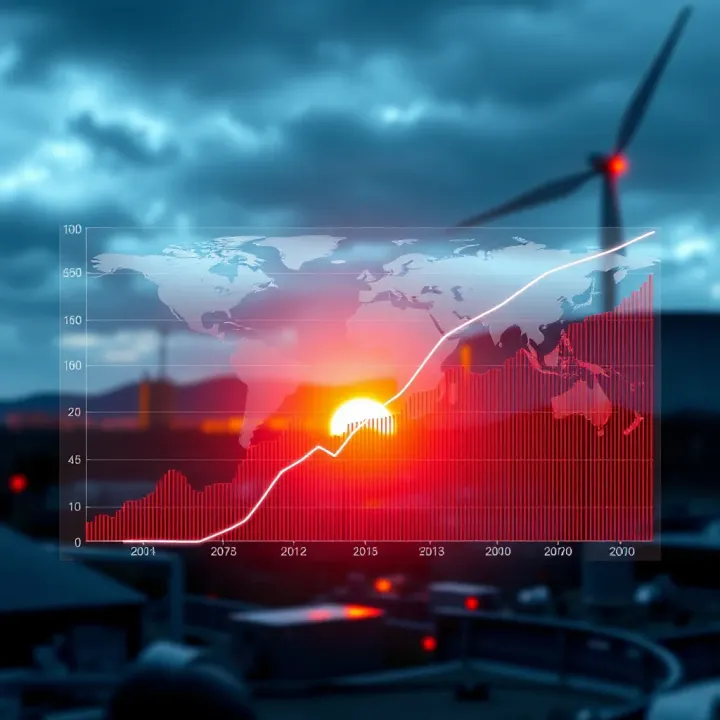
The fusion sector presents both high entry costs and technical challenges, but its long-term impact could reshape the global energy mix significantly.
Key players in the fusion market include private firms such as TAE Technologies and Commonwealth Fusion Systems, alongside public research bodies supported by governments. Investment trends show increasing interest, especially from venture capital and government grants, reflecting confidence in fusion’s potential despite decades of research still ahead.
Investors and traders should note the regulatory landscape also influences fusion market dynamics heavily. Regulatory approvals, safety standards, and government policies towards clean energy investments will play critical roles in commercialising fusion power.
Looking ahead, fusion energy could offer India a sustainable option to meet rising electricity demands while addressing climate goals. The growth of this market depends on overcoming technical hurdles, securing funding, and blending innovation with policy support.
Understanding the fusion market’s scope and challenges equips finance professionals and students with a clearer view of where new opportunities lie in the clean energy transition.
Fusion powers electricity by combining light nuclei, differing from fission
Advances include plasma control and fuel innovation
India actively participates alongside global fusion efforts
Investment and regulation strongly influence market prospects
Fusion’s potential impact is huge but requires persistence and policy support
This introduction sets the foundation to explore fusion’s evolving role in energy markets globally and in India specifically.
The fusion market holds growing importance as the world seeks cleaner and more sustainable energy sources. Unlike conventional power plants, fusion aims to replicate the process powering the sun, promising vast energy output with minimal environmental impact. For investors and traders, understanding this market is key to recognising long-term growth opportunities linked to future energy technologies.
Basics of nuclear fusion: Fusion is a process where two light atomic nuclei combine to form a heavier nucleus, releasing huge amounts of energy. In the lab, this typically involves isotopes of hydrogen, such as deuterium and tritium. This reaction happens at extremely high temperatures and pressures, creating a plasma state. Fusion’s practical appeal lies in its potential to generate immense energy from abundant fuel sources like seawater.
Difference from nuclear fission: Unlike fission, which splits heavy atoms like uranium, fusion merges light atoms. Fission produces radioactive waste that remains hazardous for thousands of years, but fusion results in far less radioactive by-products with shorter lifespans. Additionally, fusion reactions carry no risk of meltdown or chain reaction runaway, making it inherently safer.
Fusion’s appeal as an energy source: Fusion offers a nearly limitless supply of energy without greenhouse gas emissions. This makes it attractive for countries like India, facing rising power demand and environmental concerns. Once commercialised, fusion could lower electricity costs and complement renewables, overcoming their intermittency challenges.
Milestones in fusion research: Research on fusion began earnestly in the 1950s, leading to key milestones like the development of tokamaks—a device using powerful magnetic fields to contain hot plasma. The Joint European Torus (JET) experiment in the UK set records by sustaining fusion reactions for several seconds in the 1990s, proving feasibility.
Global fusion projects underway: Today, large international initiatives like ITER in France are constructing reactors designed to produce net-positive energy. ITER brings together 35 countries, including India, sharing infrastructure costs and expertise. Private firms in the US and Europe are also building smaller, innovative reactors aiming for commercialisation within the decade.
Recent breakthroughs and milestones: In recent years, breakthroughs in superconducting magnet technology and plasma control have pushed fusion closer to reality. For example, private company Tokamak Energy announced advances enabling smaller and cheaper reactors, while milestone experiments have achieved plasma temperatures exceeding 150 million Celsius. These developments boost investor confidence and market momentum.
Understanding the fusion market provides insights into a potential energy revolution, highlighting where investments can yield returns amid a transforming global power sector.
This overview sets the foundation for exploring the technologies, stakeholders, investments, and future outlook shaping the fusion market today.
Technologies powering the fusion market serve as the backbone for turning fusion energy from a scientific aspiration into a practical power source. Understanding these technologies is vital because they dictate how soon fusion can become commercially viable and how efficiently it can operate. With rising global energy demand and climate concerns, advances in fusion tech promise a cleaner alternative that could integrate well with current energy systems.
Magnetic confinement reactors (tokamaks and stellarators) rely on powerful magnetic fields to contain and control the superheated plasma where fusion occurs. Tokamaks, shaped like a doughnut, are the most widely researched design. For example, ITER in France uses tokamak technology aiming to achieve net energy gain. Stellarators, with a more twisted shape, offer better plasma stability without requiring continuous electric current but are more complex to build, like the Wendelstein 7-X in Germany. These designs show practical relevance as they guide current large-scale experiments focused on sustaining fusion reactions over longer periods.

Inertial confinement fusion takes a different approach by rapidly compressing fuel pellets with intense laser or ion beams to initiate fusion. Facilities like the National Ignition Facility (NIF) in the USA test this method. Its advantage lies in the short, controlled bursts of energy, but scaling it for consistent power generation is challenging. This technology is relevant for research into pulsed fusion reactors and could complement magnetic methods by offering diverse pathways to harness fusion.
Emerging reactor concepts such as compact stellarators, magnetised target fusion, and aneutronic fusion devices seek to overcome limitations of traditional reactors. Private players like Commonwealth Fusion Systems are working on compact tokamak reactors using high-temperature superconductors. These new ideas aim to reduce size, cost, and complexity, speeding up fusion’s commercialisation. Their practical relevance lies in creating more flexible fusion setups suitable for urban or decentralised grids.
Advances in superconducting magnets are transforming reactor design by enabling stronger magnetic fields with lower energy loss. High-temperature superconductors developed recently allow magnets to operate at higher temperatures and generate fields beyond previous limits. This directly reduces operational costs and reactor size. For instance, Commonwealth Fusion Systems’ development of a high-field magnet coil could greatly advance tokamak designs.
Plasma control and heating technologies focus on stabilising the plasma and reaching the extreme temperatures (up to 150 million °C) needed for fusion. Techniques like radio-frequency heating, neutral beam injection, and advanced feedback systems help maintain plasma confinement and prevent disruptions. Improved control extends reaction sustainment times, raising the chances of producing net positive energy, which is crucial for commercial power plants.
Material science improvements address the wear and tear caused by high neutron fluxes and extreme heat inside fusion reactors. Developing materials resistant to radiation damage and thermal fatigue is critical for reactor longevity and safety. Research on tungsten alloys and silicon carbide composites has led to promising results. This progress reduces maintenance costs and downtime, paving the way for fusion power plants that can reliably operate for decades.
Fusion market growth hinges on mastering these technologies. Each innovation brings fusion energy one step closer to reality, offering cleaner, abundant power for India's and the world’s energy needs.
Understanding who drives the fusion market and how it operates is key for investors and professionals tracking this emerging energy sector. The landscape includes governments, public entities, private companies, and venture capital, all influencing funding, research priorities, and commercial strategies.
Major national fusion programmes have laid the foundation for fusion research worldwide. Countries like the US, China, Japan, and the European Union have launched government-backed projects focusing on tokamak reactors or alternative fusion technologies. These programmes provide steady funding and infrastructure, lowering the risk for private players. For example, the US Department of Energy supports the ITER project and domestic initiatives, ensuring long-term research continuity despite commercial uncertainties.
International collaborations like ITER bring together 35 nations to build the world’s largest tokamak reactor in France. ITER’s collaborative model optimises pooling expertise, costs, and technical challenges, accelerating fusion development beyond what any single country might do alone. ITER serves as a testbed for scaling fusion power, signalling a serious global commitment and providing valuable data that startups and investors track closely.
The role of Indian government initiatives is gaining traction, especially as India aims to boost clean energy sources. The Institute for Plasma Research (IPR) leads fusion research here, while the government supports international efforts like ITER through funding and knowledge exchange. Recent announcements of enhanced fusion budgets and collaborations with private firms highlight India's intention to become a fusion technology player, which could support investors looking for emerging market opportunities.
Startups leading fusion innovation have attracted global attention by pursuing innovative approaches like compact tokamaks, laser-driven fusion, or aneutronic processes. Companies such as TAE Technologies and Commonwealth Fusion Systems have secured significant funding to commercialise fusion earlier than traditional programmes. Indian startups working on plasma technologies or superconducting magnets also represent new frontiers, offering investors a chance to spot early winners in an evolving market.
Investment flows and funding rounds in fusion are growing steadily, reflecting increasing confidence. Private investment surpassed $1 billion annually in recent years, with venture capital firms, corporate investors, and governments pooling money into promising technologies. Funding patterns reveal that crossover investors from sectors like semiconductors or clean tech are backing fusion startups, signalling belief in fusion’s future commercial viability.
Industry partnerships and joint ventures blend public funding with private innovation. Collaborations between large energy companies and fusion firms, or between national labs and startups, help share costs and risks while speeding up development. For instance, Shell’s investment in CFS underlines the energy sector’s strategic interest, while Indian public-private collaborations might soon echo this pattern, creating viable pathways from lab research to market-ready fusion power.
Public and private players together shape the fusion market’s momentum, balancing long-term research needs with commercial ambitions. For investors and stakeholders, recognising these dynamics helps clarify where opportunities and challenges lie, especially in fast-evolving ecosystems like India’s.
Investment plays a key role in advancing the fusion energy sector by funding research, development, and infrastructure. Understanding the financial flow offers insights into how governments and private players prioritize fusion as part of the broader energy landscape. Economic perspectives also highlight challenges around cost, market readiness, and the impact on energy pricing.
Global capital allocation involves billions of dollars directed towards fusion research worldwide, mainly from developed economies in Europe, the US, and increasingly Asia. ITER (International Thermonuclear Experimental Reactor) receives a major portion of public funds with contributions from member countries including India. Alongside public financing, private investors, especially venture capitalists, are injecting significant funds into startups pushing fusion technology towards commercial deployment. This growing capital interest marks fusion as a promising but still high-risk sector for investment.
Public vs private funding ratios reveal an evolving dynamic. Traditionally, fusion has relied heavily on government budgets due to its experimental nature and long development cycles. For example, the US Department of Energy and European Union each allocate hundreds of millions yearly for fusion science. However, private funding is steadily rising, led by startups such as Commonwealth Fusion Systems and TAE Technologies, attracting hundreds of millions from venture funds and corporate partnerships. This shift helps accelerate innovation but also introduces market pressures to demonstrate returns within tighter timelines.
India's participation and potential in fusion investment is modest but growing, driven by government initiatives like the Institute for Plasma Research (IPR) in Gujarat and collaborations in the ITER project. With India's rising energy demand and a clear policy push towards clean energy, there's significant potential for increased investment in fusion technology. Indian startups and research centres could benefit from enhanced funding, supporting domestic expertise and contributing to global fusion developments.
High R&D costs and long timelines remain major barriers. Fusion demands cutting-edge materials, complex reactor engineering, and extensive testing, resulting in multi-decade development periods requiring sustained capital. Investors must balance the long wait for returns against unpredictable technical hurdles. This financial uncertainty can delay scaling and deter some private sector involvement.
Regulatory and safety concerns also affect fusion's progress. Although fusion emits no greenhouse gases and produces less radioactive waste than fission, it still must comply with strict safety norms and licensing frameworks. Regulatory agencies worldwide are evolving to address fusion’s unique needs, but uncertainties around approvals and liability can cause delays and increase costs for projects.
Competition from alternative energy sources adds pressure to fusion’s market entry. Faster-maturing technologies like solar, wind, and battery storage have seen massive cost reductions and capacity growth, capturing investor interest and government subsidies. While fusion offers a cleaner energy option with abundant fuel supply, its commercial readiness lags behind these alternatives, which impacts capital flow and market prioritisation.
Fusion investment is a careful balancing act between long-term promise and near-term realities, requiring strategic funding approaches to overcome technical and economic barriers.
Overall, understanding this investment landscape provides traders, investors, and professionals with a clearer sense of fusion's financial dynamics and growth prospects, especially in India’s context. This can help identify opportunities and risks amid the rapidly evolving clean energy market.
Assessing the future outlook and implications of fusion energy for India is crucial considering the country's rapidly growing energy needs and climate commitments. Fusion has the potential to be a game-changer, offering abundant clean energy while easing pressure on conventional resources. India's energy planning must factor in how fusion technology could complement existing sources and address long-term sustainability.
India’s electricity demand is expected to increase significantly in the coming decades due to industrial growth, urbanisation, and rising living standards. Fusion energy could provide a reliable and large-scale power source, helping bridge the gap between demand and supply. Its ability to produce continuous power — unlike intermittent solar or wind — offers a valuable option for base load generation without carbon emissions.
Introducing fusion plants alongside thermal and renewable sources can stabilise the grid, especially in energy-hungry metro areas like Mumbai or Bengaluru. This diversification also reduces vulnerability to supply disruptions and reduces the need to expand fossil-fuel-based power capacity.
India currently relies heavily on coal, oil, and natural gas, which contribute nearly 60% of its electricity generation and cause environmental challenges like air pollution and greenhouse gas emissions. Fusion’s promise of clean energy could gradually replace fossil fuels in the power mix, aligning with India’s commitment under the Paris Agreement to reduce carbon intensity.
Shifting to fusion can also ease import dependence on oil and gas, saving foreign exchange and improving energy security. Considering the volatility in fossil fuel markets, introducing fusion technology may protect the economy from price swings while fostering sustainable growth.
India has set ambitious targets to generate 500 GW from renewables by 2030 and boost renewable capacity utilisation. Fusion energy can play a complementary role by backing up intermittent renewable sources like solar and wind, ensuring steady electricity supply even when weather conditions are unfavourable.
Additionally, fusion plants could work synergistically with renewable projects, sharing infrastructure and grids. This hybrid approach could accelerate India’s transition to a low-carbon energy future by making the system more flexible and reliable.
Developing homegrown scientific capabilities and a skilled workforce is essential for India to participate meaningfully in the fusion market. Investing in research institutions, universities, and specialised training programmes can cultivate expertise across plasma physics, materials science, and engineering.
India’s existing strengths in space research and nuclear technology provide a foundation, but fusion involves new challenges requiring focused efforts. Long-term investment in R&D will be key for indigenisation, cost control, and technology adaptation to Indian conditions.
Harnessing both government resources and private sector innovation offers the best chance to advance fusion projects in India. Public initiatives can fund large research facilities and infrastructure, while startups and established firms can accelerate technology development and commercialisation.
Models like public-private partnerships (PPP) should be encouraged to share risks and benefits. For example, collaborations between the Department of Atomic Energy and Indian tech ventures could foster prototypes and pilot plants. Such cooperation also attracts global investors and expertise.
Robust policy frameworks are needed to pave the way for fusion energy integration. This includes clear regulatory guidelines, funding support, intellectual property protection, and incentives for research and industry participation.
Policies should encourage long-term investments with flexible timelines given fusion’s development horizon. Establishing fusion as a clean energy priority in India’s national energy strategy can channel resources wisely. Moreover, easing approval processes and enabling grid integration plans will help fusion projects move forward faster.
India’s fusion market potential lies not just in cutting-edge science but in pragmatic strategies combining expertise-building, collaborative efforts, and strong policy support.
By focusing on these aspects, India can position itself as a significant fusion player and reduce its energy sustainability challenges in the decades ahead.
📈 Explore DGB price prediction with expert analysis on trends, factors affecting value, historical movements, and future outlook to guide investors' decisions wisely.

📈 Explore VRA price trends, key market factors, and expert analysis to understand future shifts and make smarter investments in Verasity today.

📈 Stay updated with today's Bitcoin prediction for Pakistan! Get insights from market trends, economic factors, and expert views to guide your trading decisions.

📈 Syn Coin price prediction analysing past trends, market factors, and expert views. Get insights on growth chances & risks to guide your investment choices wisely.
Based on 10 reviews