
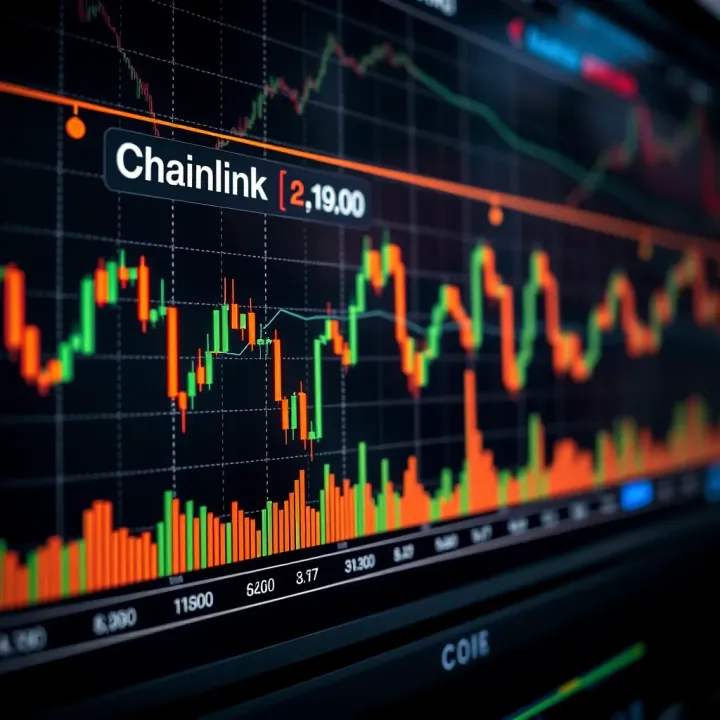
Link Coin Price Prediction and Market Insights
📈 Explore Chainlink (Link coin) price predictions with market trends, expert analysis, and factors shaping its future value for Pakistani investors and crypto enthusiasts.
Edited By
Sophie Allen
Chainlink (LINK) has become a key player in the crypto market, known for its role in connecting smart contracts to real-world data. Understanding LINK's price prediction is essential for investors and traders aiming to navigate its volatile market effectively.
LINK operates as a decentralised oracle network that brings external information such as price feeds, weather data, and event outcomes to blockchain platforms. This utility has made it indispensable within the DeFi ecosystem and beyond, directly influencing its market demand.

Historical price trends show that LINK experiences sharp fluctuations linked to broader market movements and adoption milestones. For instance, spikes in LINK's price correspond to announcements of new partnerships or integrations with popular blockchains like Ethereum. These offer concrete examples of factors pushing LINK's value upwards.
Investor behaviour also shapes LINK’s short-term performance. Sudden shifts in market sentiment driven by regulatory news, technological updates, or macroeconomic events often cause notable price swings. Seasoned traders track these dynamics closely to time their entries and exits.
Predicting LINK price involves analysing a blend of on-chain metrics, market sentiment, and the project's ongoing development. No forecast is foolproof, but understanding these elements provides a clearer investment picture.
Key factors influencing LINK's price include:
Network Adoption: Greater use of Chainlink’s oracle services by decentralised applications typically boosts demand.
Technological Upgrades: New features or security improvements can enhance confidence among users and investors.
Market Conditions: Trends in the wider cryptocurrency market, including Bitcoin’s movement, have a cascading impact on LINK.
Regulatory Environment: Changes in laws governing cryptocurrencies worldwide can affect investor sentiment.
By focusing on these practical indicators rather than vague predictions, you can better grasp LINK’s potential price trajectory and assess your investment choices.
This article will explore these points in detail, equipping you with a solid understanding of LINK price prediction fundamentals and what to watch in the market ahead.
Understanding what influences LINK's price is essential for investors and traders aiming to make informed decisions. LINK’s value doesn’t move randomly; it closely ties to both its underlying technology and broader market factors. Recognising these drivers helps anticipate price shifts and manage risks effectively.
Chainlink operates as a decentralised oracle network that feeds real-world data to blockchains, crucial for smart contracts to function properly. Unlike traditional oracles, Chainlink removes single points of failure by aggregating data from multiple sources, enhancing security and reliability. For example, a DeFi application using Chainlink can trust live price feeds without depending on a single data provider. This technological edge directly impacts LINK demand because the token powers these oracle services.
LINK’s use cases extend beyond DeFi to supply chain tracking, insurance, and gaming. Such diverse applications boost demand as enterprises adopt Chainlink’s oracles to connect off-chain data with blockchain contracts. Consider an insurance firm using Chainlink to verify weather data before claim settlement—this real-world utility supports LINK’s value by creating steady demand from projects requiring trustworthy data feeds.
LINK’s price usually moves in tandem with broader cryptocurrency market trends. During bull runs, like in 2021, growing investor enthusiasm lifts LINK along with major coins such as Bitcoin and Ethereum. Conversely, extended bear markets tend to suppress LINK’s price as overall crypto appetite wanes. Understanding these cycles aids investors in timing entries and exits, given that LINK is rarely immune to these broader market sentiments.
Regulatory developments also shape LINK’s price outlook. For instance, if Indian authorities announce clearer guidance around cryptocurrency trading or DeFi, it can trigger price rallies as investor confidence grows. On the other hand, restrictions or bans cause uncertainty that weighs down prices. Keeping tabs on news from regulatory bodies like SEBI or the RBI offers crucial clues about potential price volatility rooted in policy shifts.
LINK’s price movement results from a mix of technological utility and wider market moods, making it vital to track both internal developments and external trends for wise investment choices.
Understanding LINK's historical price trends helps investors and traders build a clearer picture of its behaviour over time. This review highlights crucial moments and recurring patterns that shape LINK’s value, offering practical insights for anticipating future movements.
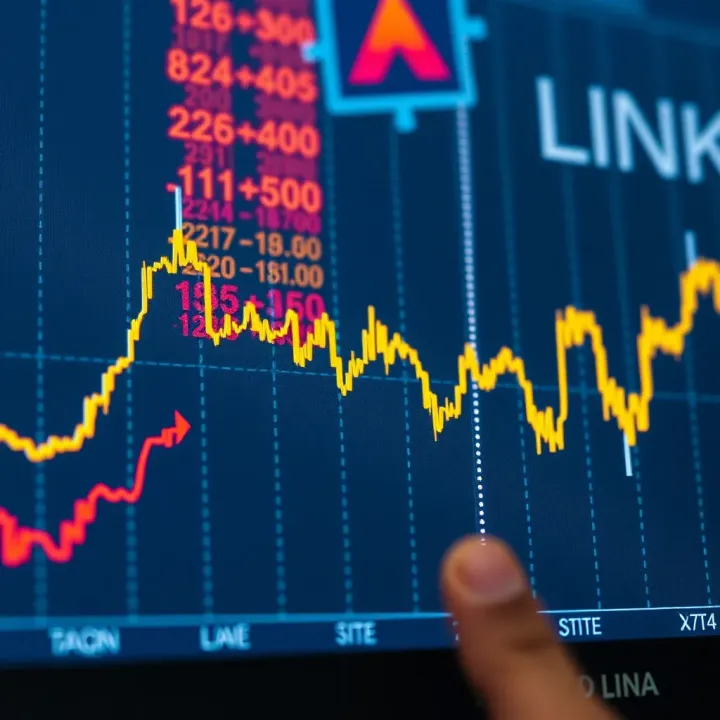
When Chainlink (LINK) launched, its initial price movements were modest but significant for gauging early market interest. Back in September 2017, LINK started trading at under $0.20. It took several months before demand picked up substantially, triggered partly by Chainlink’s technological advancements in decentralized oracles. Early investors who recognised its potential saw gradual price increases, though these were punctuated by typical market scepticism and dips.
Tracking these early movements reveals how foundational technology adoption impacts price trends. For example, initial partnerships and whitepaper updates often triggered price gains, signalling growing confidence. For investors, understanding this phase helps gauge how new crypto projects might behave once launched.
LINK’s most notable price surges aligned with broader cryptocurrency bull runs. The bull market of 2020-21 saw LINK skyrocket from about $2 to an all-time high of nearly $52 by May 2021. These spikes were driven by increased DeFi (decentralised finance) activity, where Chainlink’s oracle services became critical for smart contracts.
Such surges show how general market enthusiasm can fuel LINK’s demand, beyond its intrinsic technology. Investors should watch not only LINK’s fundamentals but also overall crypto market health, as the latter often amplifies price momentum.
LINK’s price reacts sharply to external factors like regulatory changes, partnership announcements, and macroeconomic events. For example, when government agencies hinted at stricter crypto regulations, LINK’s value often dropped temporarily across the board.
In contrast, news about partnerships with major platforms or integrations in DeFi projects tends to boost prices. Investors need to monitor such external developments closely, as they can cause swift price swings that offer both risks and entry opportunities.
LINK exhibits frequent short-term price fluctuations, often influenced by market speculation and trader behaviour. These movements can be quite volatile, reflecting liquidity changes and trading volumes on major exchanges.
For instance, price corrections usually follow rapid surges, reflecting profit-booking by traders. Recognising these cycles helps investors avoid panic selling and spot buying chances. Tools like moving averages and support-resistance levels assist in identifying when these patterns might reverse.
Reviewing historical price behaviour equips investors with realistic expectations and tactical approaches, essential for navigating LINK’s dynamic market effectively.
Understanding the methods and tools behind LINK price prediction helps investors and traders make sound decisions. This section covers technical and fundamental analysis techniques, plus expert opinions that shape market expectations.
Support and Resistance Levels play a key role in price predictions. Support refers to a price point where LINK tends to find buying interest, preventing it from falling further, while resistance is where selling pressure might cap price rises. For instance, if LINK bounces back multiple times from ₹1500, traders see this as support. Spotting these levels aids in timing entries and exits, especially during volatile markets.
Moving Averages and Indicators smooth out price data to identify trends and reversals. The 50-day and 200-day moving averages are popular; when the 50-day crosses above the 200-day, it's often a bullish sign (called a golden cross). Traders might use Relative Strength Index (RSI) or Moving Average Convergence Divergence (MACD) to gauge momentum. For example, if RSI drops below 30, LINK might be oversold, signalling a potential rebound.
Technology Development and Adoption Rates affect LINK's long-term value. Chainlink’s upgrades, such as improving oracle security or expanding on-chain data sources, can boost utilisation and investor confidence. For instance, when Chainlink launched its Cross-Chain Interoperability Protocol (CCIP), it drew attention to LINK’s growth potential, influencing price predictions positively.
Partnerships and Integrations demonstrate real-world demand for LINK’s services. Collaborations with DeFi platforms, enterprises, or government projects signal adoption. Recently, Chainlink’s integration with Google Cloud’s BigQuery helped reinforce LINK's practical relevance. Investors watch these ties as tangible proof of widespread use, affecting their outlook on price movements.
Crypto Analysts’ Forecasts combine data with market sentiment. Analysts from reputed platforms like CoinDesk or CryptoCompare often share price targets and growth estimates based on thorough research. Their views shape trader confidence and can cause short-term price moves on news cycles.
Community and Social Media Influence also impacts LINK price trends. Online platforms like Twitter, Reddit forums, and Telegram groups buzz with speculation, news, and rumours that can sway investor behaviour. For example, positive buzz around a new Chainlink feature may trigger increased buying, reflecting in price changes.
Combining technical indicators, fundamental factors, and expert insight creates a fuller picture of LINK’s price outlook, helping investors navigate its ups and downs effectively.
Understanding the risks and opportunities tied to investing in LINK is vital for making well-informed decisions. LINK’s price can swing sharply, influenced by both market sentiment and external regulatory factors. By recognising these elements and the growth potential in blockchain technology, investors can better navigate the LINK investment landscape.
LINK, like most cryptocurrencies, experiences significant price swings. These fluctuations often stem from broader crypto market cycles, investor speculation, and sudden news events. For instance, during bullish phases, LINK’s price might surge rapidly, but it can also face swift corrections during bearish trends. Traders must account for this inherent volatility to avoid rash decisions based on short-term movements.
Uncertainties also arise from the relatively young and evolving nature of the crypto market. Events such as changes in investor confidence, technological glitches, or security breaches can lead to unexpected dips. Hence, cautious risk management, such as setting stop-loss orders or diversifying portfolios, is crucial for LINK investors.
India’s approach to cryptocurrency regulation remains in flux, affecting LINK’s market prospects domestically. Government policies concerning KYC (Know Your Customer) compliance and taxation, including Goods and Services Tax (GST) on transactions, can influence trading volumes and investor sentiment.
For example, proposed crypto regulation bills have raised concerns about outright bans or strict controls. Although the government has not banned cryptocurrencies as of now, any negative regulation could reduce market liquidity and increase price instability. Indian investors should thus closely monitor updates from authorities like the Reserve Bank of India (RBI) and Securities and Exchange Board of India (SEBI) to mitigate regulatory risks.
LINK powers Chainlink’s decentralised oracle network, which plays a crucial role in bridging smart contracts with real-world data. As blockchain applications expand into sectors like insurance, supply chain, and gaming, the demand for reliable oracle solutions rises. This growing adoption directly reflects on LINK’s utility and market value.
For example, DeFi projects require accurate price feeds to execute loans and trades correctly. Increasing integration of Chainlink's oracles into such projects strengthens LINK’s use case, potentially driving long-term demand and price appreciation.
DeFi platforms rely heavily on Chainlink's infrastructure for transparent, tamper-proof data. The rapid growth of DeFi in India and globally opens up clear opportunities for LINK, as it remains a preferred oracle solution.
With more Indian users joining platforms offering lending, borrowing, and yield farming, LINK’s demand could reflect DeFi’s fortunes. Moreover, as DeFi protocols innovate, further oracle usage might expand LINK’s role, enhancing its market position and appeal to investors.
Navigating LINK investing requires balancing awareness of its volatility and regulatory landscape with an eye on the expanding blockchain ecosystem that underpins its rising demand.
Staying informed about LINK price trends is key for traders and investors to make timely and wise decisions. The cryptocurrency market moves fast; missing out on fresh data or evolving sentiments can lead to missed opportunities or unanticipated losses. By regularly tracking LINK’s price and the factors influencing it, you maintain a clearer grasp of market conditions.
Major exchanges like Binance, Coinbase, and WazirX provide real-time price updates for LINK token. These platforms show current trading volumes, order book depth, and recent price changes, giving you direct insight into market activity. For example, Binance offers detailed charts and historic data which helps identify trends or support levels. Relying on trusted exchanges ensures you receive accurate data free from manipulation or delay.
Financial news portals such as Moneycontrol, Economic Times, and CoinDesk offer expert analysis and up-to-date news affecting LINK’s price. Reports on regulatory shifts, technological developments, and macroeconomic factors are crucial in understanding price swings. Additionally, market analysis articles can reveal patterns or forecast shifts that raw price data alone might miss. Accessing these insights helps you prepare for market moves influenced by broader economic or political events.
Mobile apps like CoinStats, Blockfolio, or Crypto Tracker allow you to set custom price alerts for LINK. When LINK hits your specified target price, you get instant notifications, helping you act fast without constantly checking prices. This is quite practical during volatile phases when LINK might swing sharply within minutes.
Many trading platforms provide technical charting tools with notification features. You can configure alerts based on moving average crossovers, RSI (Relative Strength Index) levels, or support and resistance breaks for LINK. For instance, receiving a notification when LINK’s price breaks above its 50-day moving average can signal a bullish run. Such tools make technical analysis more accessible and help you respond quickly to changes indicated by market indicators.
Staying updated on LINK price trends with reliable sources and effective tools lets you navigate the crypto market more confidently and manage risks more efficiently.
📈 Explore Chainlink (Link coin) price predictions with market trends, expert analysis, and factors shaping its future value for Pakistani investors and crypto enthusiasts.
📈 Explore VRA price trends, key market factors, and expert analysis to understand future shifts and make smarter investments in Verasity today.

📈 Get a clear view of STRK coin’s price trend and market outlook in Pakistan. Learn about its background, key indicators, and expert views for informed investing.
🔍 Explore Quant (QNT) price predictions with market trends, expert insights, and key factors affecting its value in Pakistan's crypto space. 📈💰
Based on 7 reviews