

USD to PKR Open Market Forecast and Trends
📉 Explore how economic trends, policies, and market moves shape the USD to PKR open market rates. Stay updated with forecasts for Pakistan’s currency shifts. 💹
Edited By
Daniel Hughes
The EUR/USD currency pair remains the most traded forex pair globally, reflecting the economic health and political climate of both the Eurozone and the United States. Traders and investors keep a close eye on this pair due to its sensitivity to economic data, central bank policies, and geopolitical developments.
Understanding what moves EUR/USD requires a grasp of several factors:

Economic Indicators: Data like GDP growth, inflation rates, and employment numbers from both regions play a major role. For example, a stronger US jobs report usually strengthens the dollar against the euro.
Central Bank Actions: The European Central Bank (ECB) and the Federal Reserve (Fed) influence the pair through interest rate decisions and quantitative easing programmes. The Fed’s recent emphasis on inflation control often fuels volatility in the pair.
Geopolitical Events: Political instability, trade issues, or crises impact market sentiment. For instance, tensions in Eastern Europe or shifts in US-EU trade talks can cause sudden EUR/USD swings.
Keeping abreast of these elements allows traders to form clearer expectations and better manage risk.
Moreover, market sentiment and technical analysis provide practical tools to interpret price movements. Support and resistance levels, moving averages, and momentum indicators often guide entry and exit points.
Overall, this section lays the groundwork to explore the key drivers behind EUR/USD's movements, offering a solid base for making informed trading decisions in volatile markets.
Economic data plays a direct role in shaping the EUR/USD currency pair. Traders and investors closely watch these figures because they reflect the economic health of the Eurozone and the United States, influencing demand for their respective currencies. For instance, stronger economic growth or lower unemployment in one region often strengthens its currency against the other.
GDP growth in the Eurozone signals the pace at which the economy is expanding. If the quarterly GDP beats expectations, it suggests healthier economic activity, prompting investors to favour the euro. For example, if Germany and France report solid GDP growth, the euro typically gains strength as these countries form the core of the Euro area. Conversely, sluggish or negative GDP growth tends to weaken the euro, as it raises concerns about economic stagnation.
Inflation rates in the Eurozone influence the European Central Bank's (ECB) monetary policy decisions, which in turn impact the euro. Rising inflation above the ECB’s target might push it towards tightening measures like interest rate hikes, supporting the euro. On the other hand, persistently low inflation can lead the ECB to maintain accommodative policies, putting downward pressure on the euro. For instance, when inflation hovered below 2% in recent years, the euro struggled to rally as the ECB kept interest rates near zero.
Employment data such as the unemployment rate affects consumer confidence and spending in the Eurozone. Lower unemployment generally means more disposable income, boosting consumer spending and economic growth. This positive cycle tends to strengthen the euro. To illustrate, Spain’s improving employment numbers in the past led to renewed investor interest in the euro. In contrast, rising unemployment can prompt the ECB to ease policy, which might weaken the currency.
US non-farm payrolls report gives monthly insight into job creation outside the farming sector—an essential indicator of economic health. Strong payroll growth signals a robust economy, usually strengthening the US dollar. The unemployment rate further complements this data; a falling rate indicates job market tightness, often prompting the Federal Reserve (Fed) to consider raising interest rates. For example, strong payroll reports in mid-2023 boosted the dollar as markets anticipated Fed tightening.
CPI inflation data reflects the rise or fall in prices paid by consumers and heavily influences Fed monetary policy. Higher CPI numbers usually signal rising inflation pressures, which can lead the Fed to increase rates. This tends to strengthen the dollar. Conversely, lower CPI readings reduce pressure on the Fed, often weakening the currency. A CPI spike in early 2024 brought renewed attention to the dollar’s performance as the market grappled with inflation concerns.
Retail sales numbers indicate consumer spending strength, a major driver of the US economy. Robust retail sales often imply economic resilience and support the dollar. Similarly, industrial production measures manufacturing output and wider economic activity. An increase in industrial production points to economic expansion, which can boost the dollar. For instance, an unexpected rise in retail sales during a festival season in the US can create positive momentum for the dollar in forex markets.
Tracking these specific economic indicators is vital for forming a clear picture of EUR/USD movements. It equips traders with timely signals to anticipate currency trends based on underlying economic fundamentals.
Key Eurozone data to watch: GDP growth, inflation rates, employment figures.
Key US data to watch: Non-farm payrolls, CPI inflation, retail sales, industrial output.
Each of these metrics contributes to the ongoing dialogue between traders and central banks, ultimately influencing the EUR/USD exchange rate.
Central banks play a decisive role in shaping the EUR/USD currency pair's direction. Their monetary policy decisions influence market sentiment, interest rates, and liquidity—key ingredients driving currency strength. Traders and investors closely watch announcements from the European Central Bank (ECB) and the US Federal Reserve to anticipate shifts in the pair's movement.
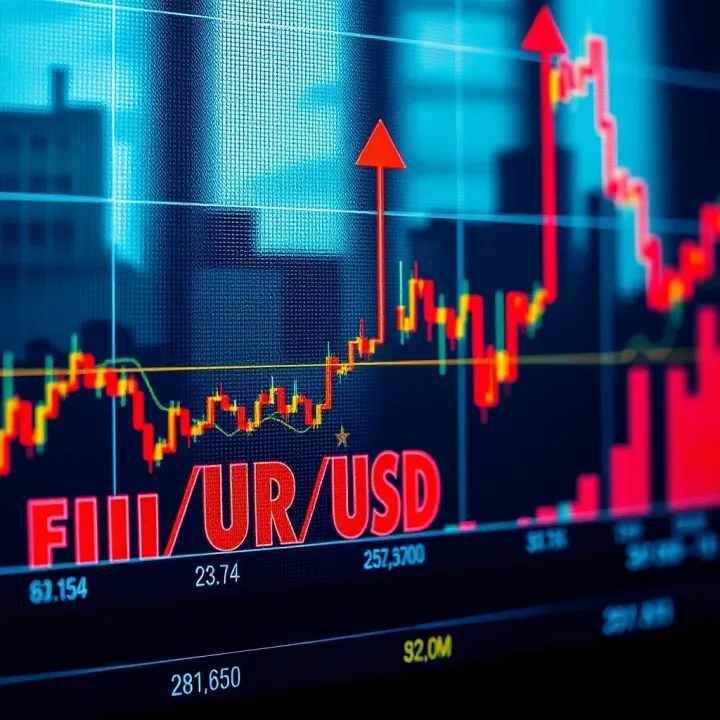
The ECB’s interest rate adjustments are a primary factor affecting the euro. A hike in rates generally strengthens the euro by attracting yield-seeking capital, while rate cuts can weaken it by lowering returns on euro-denominated assets. For example, during 2022, when inflation soared across the Eurozone, ECB rate hikes led to euro appreciation against the dollar.
Forward guidance also impacts expectations. Clear communication about future policy helps the market price in moves well in advance. If the ECB signals a hawkish stance, traders might pre-emptively buy euros. On the other hand, vague or dovish guidance tends to dampen euro demand.
Quantitative Easing (QE) involves the ECB buying government bonds or other securities to inject liquidity and lower borrowing costs. This often weakens the euro as it increases money supply, making the currency less scarce. For instance, during the pandemic, ECB’s expansion of asset purchases helped stabilise markets but kept the euro under pressure.
When the ECB tapers or ends QE, it signals tightening, which can strengthen the euro. Traders track the pace and scale of asset purchases closely to gauge ECB’s monetary direction and its implications for EUR/USD.
The Federal Reserve’s interest rate policy deeply influences the US dollar’s value. Higher rates attract foreign investment, pushing the dollar up against currencies like the euro. When the Fed signalled aggressive rate hikes in 2023 to combat inflation, the dollar strengthened significantly.
Conversely, a pause or cut in rates can trigger dollar weakness. Traders often react sharply to Fed statements, making it crucial to monitor their tone and economic assessments for EUR/USD forecasts.
Beyond rates, the Fed’s balance sheet management affects market liquidity. Reducing the Fed’s holdings of bonds (quantitative tightening) pulls liquidity from the system, which can bolster the dollar by tightening financial conditions.
Market responses to these adjustments can be volatile. For example, unexpected increases in balance sheet roll-offs may spook investors, causing dollar strength and EUR/USD declines. Understanding these moves allows traders to position themselves ahead of market swings.
Central bank policies from both the ECB and the Fed set the pace for EUR/USD trends by guiding interest rates, signalling future stances, and managing liquidity through asset purchases or sales. Staying updated on these decisions is key for effective forecasting and trading.
ECB rate changes and forward guidance shape euro strength.
QE programmes impact liquidity and euro valuation.
Fed’s rate outlook pulls the dollar up or down.
Balance sheet moves can cause sharp market reactions.
Understanding these policy tools helps traders and investors anticipate shifts in EUR/USD with better precision.
Geopolitical risks significantly influence the EUR/USD currency pair by affecting investor sentiment and economic stability. Political events often prompt sudden market reactions, impacting both the euro and the dollar. Understanding these risks helps traders and investors anticipate volatility and adjust positions accordingly.
Though the UK is no longer part of the EU, Brexit's effects continue to ripple through Europe’s trade dynamics, indirectly influencing the euro's value against the dollar. Supply chain disruptions and new customs checks between the UK and EU countries have increased costs for exporters and importers alike. For instance, sectors reliant on just-in-time delivery faced challenges, which sparked concerns about slower economic growth within the Eurozone.
Furthermore, ongoing negotiations on financial services and regulatory standards maintain uncertainty. Traders keep a close eye on these developments as any setbacks could weaken the euro by affecting economic forecasts and investor confidence.
Elections in countries such as Germany, France, or Italy can lead to shifts in policy that affect the euro. For example, if a new government leans towards increased fiscal stimulus or protectionist trade measures, the market could interpret this as a sign of economic instability, weighing down the euro.
Policy changes related to structural reforms or spending can also impact inflation expectations and central bank actions. The recent German general election stirred discussions on energy policies and EU fiscal rules, sparking temporary volatility in the EUR/USD.
US trade policies, such as tariffs and bilateral deals, directly impact global trade flows and currency valuations. When the US imposes tariffs on EU goods or commodities, it can slow down Eurozone exports, pressuring the euro.
For instance, past tariff hikes on steel and aluminium led to market jitters, causing EUR/USD fluctuations. Traders must monitor announcements from the US Trade Representative and Congress, as shifts in policy alter expectations for economic growth and currency strength.
Diplomatic issues like sanctions, military conflicts, or disputes with major trading partners affect risk sentiment globally. Recent tensions between the US and China, for example, triggered safe-haven flows into the dollar, pushing EUR/USD down temporarily.
Similarly, sanctions on Russia have impacted energy supplies to Europe, influencing inflation and economic outlooks. These factors, in turn, affect the euro’s strength versus the dollar. Market participants watch geopolitical flashpoints closely, as escalating tensions can cause rapid currency moves.
Traders and investors tracking EUR/USD should continuously assess geopolitical developments since these events often create unexpected market swings, impacting trading strategies and risk management.
Technical analysis offers crucial insights into the EUR/USD currency pair by focusing on price patterns, trends, and market psychology. Traders use this approach alongside fundamental factors to make informed buying or selling decisions. For EUR/USD, understanding technical indicators helps spot entry and exit points effectively, reducing guesswork amid global economic upheavals.
Support and resistance levels act as price floors and ceilings where the market tends to pause or reverse. Identifying these zones helps traders anticipate price behaviour. For example, if EUR/USD repeatedly bounces back near 1.0800, that price becomes a key support level. Similarly, resistance might appear around 1.1050 if the pair struggles to break above it.
Such levels arise from past price action, trader psychology, and order clusters. Drawing horizontal lines on charts where price reversals occur reveals these zones clearly. Traders can set stop-loss or take-profit orders close to these to manage risk. Pinpointing support and resistance offers a strategic advantage, especially in volatile sessions.
Moving averages smooth out price fluctuations by averaging values over a specific period, revealing the trend direction. A common method is the 50-day and 200-day moving averages crossover. When the 50-day average crosses above the 200-day, it signals a bullish momentum for the EUR/USD pair, often called a "golden cross". Conversely, if it dips below, known as a "death cross," traders might prepare for a bearish run.
The Relative Strength Index (RSI) measures whether the pair is overbought or oversold on a scale of 0 to 100. An RSI above 70 signals overbought conditions, suggesting a possible pullback. An RSI below 30 indicates oversold, hinting at a potential rebound. Combining RSI with moving averages strengthens trade signals and timing.
Fibonacci retracement levels identify potential reversal zones by measuring after-move pullbacks within an existing trend. For instance, if EUR/USD rises from 1.0700 to 1.1100, traders will watch levels like 1.0920 (23.6%), 1.0870 (38.2%), and 1.0800 (61.8%) for price corrections. These levels act as natural stopping points and entry spots.
Breakout points occur when the price moves beyond support, resistance, or trendlines with increased volume. For example, a breakout above the 1.1050 resistance in EUR/USD may trigger fresh buying interest, signalling a strong shift in market sentiment. Recognising breakouts alongside Fibonacci levels gives traders confidence in trend continuation or reversal, allowing better position management.
Understanding technical analysis tools like support-resistance, moving averages, RSI, Fibonacci retracements, and breakout points enhances the accuracy of EUR/USD trading strategies and limits exposure to unexpected market swings.
Applying these techniques in real-time requires practice but serves as a vital part of a disciplined trading plan for this major forex pair.
Successful trading of the EUR/USD pair relies heavily on effective strategies paired with robust risk management. Given the currency pair's sensitivity to global economic shifts, traders should adopt clear plans to handle market swings without losing control over their positions. This section covers practical tactics for managing volatility and shows why sensible stop loss and position sizing are vital tools.
Volatility in EUR/USD can be quite pronounced due to frequent releases of economic data from the Eurozone and the US. Traders must recognise periods of high volatility and adjust their entry points accordingly. For example, entering a trade just before the US non-farm payrolls report can lead to sudden sharp price moves against your position. Instead, waiting for the initial market reaction to settle before entering reduces risk.
Using technical indicators like the Average True Range (ATR) can help quantify volatility. A rising ATR suggests expanding price swings, signalling a need for wider stop losses or smaller trade sizes. Meanwhile, timing entries around major support or resistance levels identified through prior price action helps catch trend reversals or breakouts with better odds. For instance, anticipating EUR/USD rebounds near the 1.10 support level can offer less risky buy opportunities.
Stop loss orders act as a safety net to limit losses if the market moves unfavourably. Setting stop losses too tight may lead to frequent exits due to normal price noise, while excessively wide stops increase potential losses. A balanced approach is crucial. Traders often place stop losses just beyond key technical levels, such as below a recent swing low for long positions, ensuring the trade is protected from typical fluctuations.
Position sizing complements stop loss use by determining how much capital to allocate per trade based on risk tolerance. A common rule is to risk only 1–2% of the total trading capital on any given trade. For example, if you have ₹5 lakh, risking 1% means a loss limit of ₹5,000 per trade. If your stop loss is 50 pips away, your position size adjusts so that a 50-pip move equals ₹5,000 loss.
Together, these tools prevent large drawdowns that can derail your portfolio. They also instil discipline and emotional control, helping traders stick to their plans during unpredictable market moves.
Managing volatility with well-timed entries, combined with thoughtful stop loss placement and position sizing, safeguards your investments while improving chances for consistent profits in EUR/USD trading.
In summary, a practical approach to strategies and risk management shapes trading success in the EUR/USD market. Understanding price movements, respecting risk limits, and adapting to market conditions keeps you prepared for the ups and downs of this dynamic currency pair.
📉 Explore how economic trends, policies, and market moves shape the USD to PKR open market rates. Stay updated with forecasts for Pakistan’s currency shifts. 💹

📈 Explore ApeCoin price trends, market analysis, and key factors shaping its future value to make smart investment choices in crypto. 💰

📊 Explore detailed USDJPY forecasts, key economic indicators, market trends, and geopolitical factors shaping currency moves to guide smart trading decisions.

📈 Explore gold price trends in Pakistan, factors affecting demand like economy and currency, plus how global events influence future gold investments and market outlook. 💰
Based on 13 reviews