
Understanding CFD Trading: Basics & Strategies
📈 Learn how CFD trading works in Pakistan! Understand leverage, strategies, market analysis, and risk management to trade smart and safe.
Edited By
Amelia Foster
High-frequency trading (HFX) refers to the use of sophisticated algorithms and powerful computers to execute thousands of trades at lightning speed. These trades happen in fractions of a second, far faster than any human trader could manage. In Pakistan’s financial markets, HFX is gradually gaining attention, especially as local brokers upgrade technology and liquidity improves on the Pakistan Stock Exchange (PSX).
At its core, HFX relies on advanced software that scans market data to spot tiny price differences or changes in supply and demand. The system then quickly buys or sells assets, often holding positions for just seconds or less. This allows traders to capitalise on small price movements repeatedly throughout the trading session.
HFX can improve market efficiency by tightening bid-ask spreads—the difference between buying and selling prices. For example, in volatile sessions on the PSX, high-frequency systems can help keep trading smooth by providing liquidity when many investors hesitate. But the speed and automation involved also bring risks, such as increased market volatility or the potential for flash crashes where prices briefly plunge without clear cause.
Traders and regulators in Pakistan should understand both the benefits and threats posed by high-frequency trading. While it can promote faster price discovery and smoother trade execution, unchecked HFX might increase systemic risks.
Millisecond-level trade execution
Use of co-location services near exchange servers to reduce latency
Automated strategies like arbitrage and market making
Dependence on large volumes of market data and computing power
In Pakistan’s evolving market landscape, HFX presents unique challenges. For instance, sudden regulatory changes or infrastructural limits can impact how algorithms perform. Local traders must assess whether integrating HFX tools aligns with their strategy and risk tolerance.
Understanding how HFX works in our markets will help investors navigate this complex terrain more confidently and ensure that financial innovation supports market stability rather than undermines it.
High-frequency trading (HFX) is a method of executing a large number of orders at extremely fast speeds, usually milliseconds or microseconds, through computer algorithms. This approach enables traders to capitalise on very small price movements that traditional trading methods would struggle to exploit profitably. In Pakistan's growing financial markets, especially on platforms like the Pakistan Stock Exchange (PSX), understanding HFX can provide traders with insights into how modern trading strategies shape market dynamics.
HFX trading relies on automated systems executing multiple trades in rapid succession, aiming to generate profits from tiny price differences. Instead of holding positions for days or longer, HFX positions are typically very short-term, often lasting seconds or less. This kind of trading requires sophisticated algorithms that scan markets continuously, analyse price data, and then place or cancel orders immediately. Given its speed and volume, HFX has reshaped how liquidity and price information flow in today’s markets.
Traditional trading often depends on human decision-making, which takes longer and usually targets longer-term gains. A typical retail investor in Pakistan might buy shares and hold them for months or years, based on fundamentals or news. By contrast, HFX removes emotional bias and trades based purely on data and statistical models. While traditional trading can be opportunistic or speculative, HFX emphasises speed and volume to capture very small profits repeatedly, which adds up over time.
The backbone of HFX is complex algorithms—programmed instructions that automatically execute trades without human intervention. These algorithms analyse multiple market parameters simultaneously, from order book depth to price momentum, and react within fractions of a second. For Pakistani traders looking to venture into HFX, mastering or accessing these automated systems is crucial. Many brokers now offer platforms integrated with algorithmic trading capabilities, which can drastically reduce manual errors and reaction delays.
Speed, or low latency, means how quickly a trading system can process information and execute orders. In HFX, milliseconds can mean the difference between profit and loss. Traders often co-locate their servers close to exchange data centres to cut down transmission delays. In Pakistan, where internet stability and speed can vary, having reliable infrastructure is essential for any serious participant in HFX. Without low latency, the advantage of fast algorithms diminishes, making it tough to compete with global players whose systems operate near-instantly.
Successful HFX depends not just on strategy but also on access to cutting-edge technology and efficient connectivity—factors increasingly available in Pakistan’s evolving financial landscape.
Understanding these fundamentals helps traders and investors grasp how HFX integrates with traditional markets, influencing liquidity, pricing, and volatility. Developing knowledge about the technical and operational side is the first step for those considering this fast-paced trading approach.
High-frequency trading (HFX) significantly shapes financial markets by affecting liquidity, price discovery, and sometimes causing market volatility. Understanding this impact helps traders and investors gauge how their strategies might interact with fast-moving algorithms in Pakistan’s emerging markets and beyond.
HFX generally increases market liquidity by continuously placing and cancelling orders at very high speeds. This constant activity narrows the bid-ask spread—the difference between buying and selling prices—making it easier for traders to enter or exit positions without causing large price shifts. For example, in Pakistan Stock Exchange (PSX), growing HFX activity has helped major blue-chip stocks see tighter spreads, benefiting retail investors by reducing transaction costs.
Besides just volume, HFX bots adapt quickly to supply and demand changes, filling order books with buy and sell offers that keep markets active even during slower periods. This increased liquidity means traders have more options and better price stability for their transactions.
HFX contributes to price discovery by swiftly incorporating public information into stock prices. Algorithms scan news feeds, economic reports, and corporate announcements, adjusting prices to reflect new data faster than human traders can. This speed means prices more accurately represent the true value of assets at any moment.
Practically, this efficiency helps markets reflect Pakistan’s economic changes, for instance, adjustments after SBP interest rate announcements or changes to FBR tax policies, more promptly. However, it also increases the complexity of price movements, requiring traders to be more vigilant about rapid fluctuations.
While HFX smooths liquidity, it can also amplify short-term price swings. The rapid submission and withdrawal of orders can cause sudden spikes or drops in stock prices. For example, if many HFX algorithms simultaneously react to a piece of news, their collective buying or selling pressure might drive prices sharply in one direction within seconds.
This temporary volatility can affect traders relying on manual decisions or slower systems, as they may face unexpected price gaps. For Pakistani investors, this means that trading during volatile sessions requires extra caution and possibly better risk management.
Flash crashes—rapid, deep price declines that recover swiftly—are one major concern linked to HFX. These incidents often occur when algorithmic trading triggers a cascade of sell orders, overwhelming traditional market mechanisms. One famous global example is the 2010 Flash Crash in the US; Pakistan’s markets remain comparatively less exposed but cannot be immune as HFX grows.
Such instability can shake investor confidence and disrupt orderly trading. Regulators in Pakistan's Securities and Exchange Commission (SECP) are aware and emphasize monitoring to prevent market abuse or technical failures that might cause sudden crashes. Traders should stay informed and adopt strategies that factor in possible abrupt market moves.
HFX presents both opportunities and challenges for market participants. While it improves liquidity and price accuracy, awareness of its role in volatility is vital for successful trading.
Understanding these market impacts helps traders and investors position themselves better in a market gradually transforming with technology-driven innovations.
High-frequency trading (HFX) offers clear benefits for traders, especially those who act quickly and leverage technology. Understanding these opportunities is vital for traders in Pakistan who aim to tap into this fast-moving area of finance. Practically speaking, HFX can increase profitability and market participation by exploiting subtle price differences and handling large trade volumes efficiently.
Exploiting small price gaps is a core strategy in HFX. Traders use algorithms to detect tiny differences in asset prices across different markets or within fractions of a second on the same exchange. Even a gap as small as a few paisa can be profitable given the rapid execution of trades. For example, if the price of a stock on the Pakistan Stock Exchange (PSX) drops by Rs 0.05 momentarily due to supply-demand imbalances, an HFX algorithm can quickly buy at the lower price and sell as it rises back, locking in small but consistent profits over numerous trades.
This approach relies on trading volume rather than single large gains. Over thousands or millions of transactions, those small margins add up significantly. That's why high volume and turnover benefits appeal to HFX practitioners. The ability to place and cancel orders rapidly means traders can ride even the smallest price fluctuations safely. Markets with tight spreads and high liquidity, like major stocks or currency pairs, provide fertile ground for these strategies. In Pakistan, even though the local market is smaller compared to global exchanges, rising electronic trading adoption offers growing turnover potential for HFX traders.
Several platforms now provide tools suitable for HFX within Pakistan. Brokers authorised by the Securities and Exchange Commission of Pakistan (SECP) are upgrading systems to support faster order entry and algorithmic strategies. Moreover, international platforms like MetaTrader and cTrader offer plugins and APIs that traders here can program to execute HFX strategies in compliant markets.
However, simply having access to these platforms isn't enough. Necessary infrastructure and internet speed are critical for success. HFX requires ultra-low latency connections, stable broadband or fibre optic internet, and uninterrupted power supply — challenges still faced in many Pakistani cities due to loadshedding or inconsistent connectivity. Traders operating from commercial hubs like Karachi, Lahore, or Islamabad generally have better infrastructure. Having robust backups such as UPS systems and dedicated VPNs can further reduce the risk of costly disconnections.
For Pakistani traders interested in HFX, combining the right technological setup with carefully chosen platforms offers a practical path to tapping into this competitive space.
In summary, while HFX demands significant technical readiness and quick reaction times, its ability to earn profits from small price changes across large volumes presents tangible benefits. For those willing to invest in the right tools and infrastructure, the opportunities are increasingly available even within Pakistan’s evolving financial markets.
High-frequency trading (HFX) offers remarkable speed and volume advantages but comes with notable risks and challenges. Understanding these risks helps traders, investors, and regulators navigate this fast-moving landscape more effectively. The rapid pace of HFX leaves little room for error, making system reliability and regulatory oversight critical factors in its proper functioning within markets, including Pakistan’s emerging financial environment.
One of the biggest challenges in HFX is the risk of system failures or glitches. Since trades happen in milliseconds, even a brief malfunction can lead to incorrect trade executions or missed opportunities. For instance, a glitch in the trading algorithm could result in incorrect order placements, causing significant financial losses within seconds. The 2010 "Flash Crash" in the US market highlighted how automated systems might react unpredictably under stress, leading to sudden market drops.
In Pakistan’s context, where infrastructure and technical robustness are still developing, reliance on systems with high uptime and fault tolerance is especially crucial. Local traders must ensure their platforms and hardware can sustain continuous, error-free operations to avoid costly disruptions.
HFX depends heavily on real-time market data and high-speed connectivity. Interruptions in data feeds or network delays can cause traders to act on outdated information, leading to poor trade decisions. For example, if a trader’s connection slows down during a volatile period, the system may miss a critical price move, resulting in missed profits or unexpected losses.
Given Pakistan’s variable internet quality and occasional load-shedding issues, these connectivity risks are quite relevant. Traders should invest in reliable broadband, consider backup internet solutions, and use platforms with fast, redundant data feeds to minimise such risks.
HFX can be used to manipulate markets through tactics like spoofing or layering, where fake orders are placed to mislead other traders about demand or supply. This can distort prices unfairly, hurting genuine investors. In Pakistan, where regulatory oversight is still catching up with such advanced trading techniques, these risks may be higher.
For example, a trader could flood the order book with non-genuine orders to push prices up, then sell at inflated prices before cancelling them. Such practices undermine market fairness and trust.
Globally, many regulators have introduced rules targeting HFX practices to reduce risks. In Pakistan, the Securities and Exchange Commission of Pakistan (SECP) has issued general guidelines on electronic trading but lacks detailed provisions specific to HFX. The Federal Board of Revenue (FBR) is also working on clarity regarding taxation of profits from algorithmic trading.
Until detailed frameworks and monitoring systems are in place, Pakistani traders and financial institutions must exercise caution. It’s advisable to stay informed about evolving regulations, comply with market codes, and participate in industry education to reduce ethical and legal risks.
Traders should treat HFX as a powerful but complex tool that requires careful management of technical risks and adherence to ethical trading standards, especially in Pakistan's developing regulatory environment.
By recognising these risks and addressing them proactively, market participants can better harness the advantages of high-frequency trading while safeguarding overall market integrity.
Regulations and compliance hold a significant place in shaping the high-frequency trading (HFX) landscape in Pakistan. Their role ensures that trading activities remain transparent, fair, and aligned with market integrity. For traders and investors active in Pakistani markets, understanding these rules not only reduces legal risks but also helps navigate the complexities of HFX effectively.
The Securities and Exchange Commission of Pakistan (SECP) regulates trading activities to protect market participants and maintain orderly markets. While the SECP has not issued highly specific rules solely focused on HFX yet, its broader regulations on electronic trading platforms, market conduct, and insider trading still apply to HFX traders. For example, SECP requires brokers and trading firms to maintain robust risk management systems which are critical given the velocity and volume involved in HFX.
Moreover, market surveillance conducted by the SECP helps detect unusual trading patterns that may indicate manipulation or flash crashes — risks particularly relevant to HFX. Compliance with SECP guidelines thus acts as a first line of defence against unfair practices in Pakistan’s financial markets.
The Federal Board of Revenue (FBR) treats profits from HFX trading as capital gains or business income depending on the trader’s status. This distinction affects tax treatment. For instance, individual traders who frequently engage in HFX may fall under business income, subject to different tax rates and requirements.
Pakistan’s tax framework demands accurate record-keeping of all trades, including timestamps, volumes, and gains or losses. Traders should be mindful of the need to file timely returns and pay withholding taxes where applicable. The FBR is increasingly focusing on digital transaction reporting, making electronic filings and audits more common, which directly impacts HFX operators relying on fast, automated trades.
As HFX gains momentum in Pakistan, there is a need for clearer, dedicated regulations to address its unique challenges. Specific measures could include mandating minimum latency standards to prevent unfair speed advantages or formalising rules against manipulative strategies like quote stuffing or layering.
In addition, introducing transparency requirements for algorithmic trading models and enhanced reporting for HFX firms would help regulators better monitor market health and protect retail investors. These improvements will also encourage investor confidence and align Pakistan’s market practices with international standards.
Educating traders and investors on the workings and risks of HFX is vital for informed decision-making and risk management. Many in Pakistan might be drawn to HFX due to its profit potential but lack understanding of the technical and regulatory nuances involved.
Workshops, online courses, and publications targeted at Pakistani traders can demystify HFX concepts and highlight compliance obligations. For example, explaining the importance of system safeguards against outages and the tax implications of frequent trading can prevent costly mistakes. Ultimately, informed investors help create a more resilient and transparent trading environment.
Clear regulations combined with comprehensive investor education form the backbone for a healthy and fair HFX trading ecosystem in Pakistan.
SECP ensures risk management and market integrity
FBR focuses on correct tax classification and reporting
Regulatory updates should target HFX-specific challenges
Investor education bridges knowledge gaps for safer trading
Understanding these aspects helps traders operate within legal boundaries and use HFX opportunities wisely in Pakistan's evolving financial markets.
📈 Learn how CFD trading works in Pakistan! Understand leverage, strategies, market analysis, and risk management to trade smart and safe.
Discover how margin works in forex trading 📈, its types, impact on strategies, and risks involved to trade wisely and boost confidence in Pakistan markets.
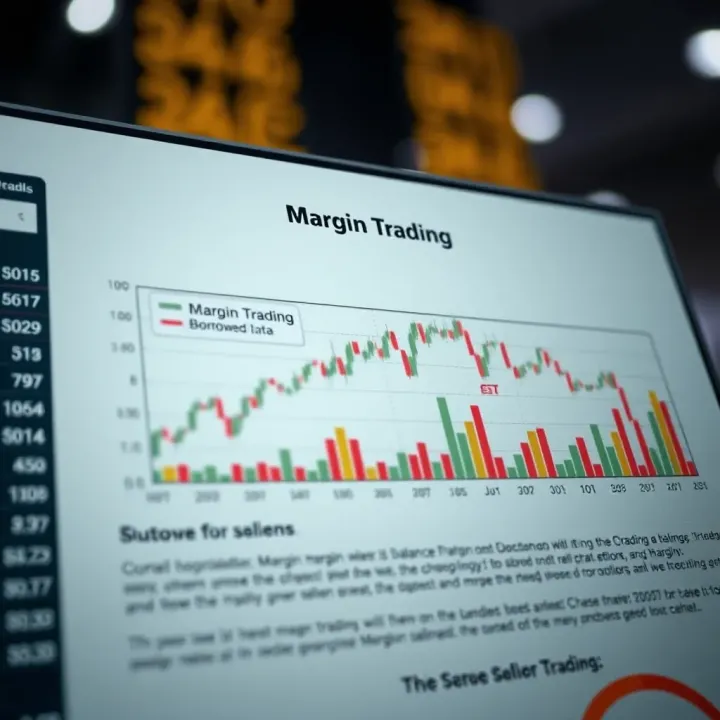
📊 Learn how margin works in trading! Explore accounts, requirements, risks & rewards to invest wisely and manage your trades like a pro in Pakistan. 💹
📊 Learn how trading signals work in forex & stocks! Explore types, risks, & tools with practical tips tailored for traders in Pakistan and beyond.
Based on 7 reviews