
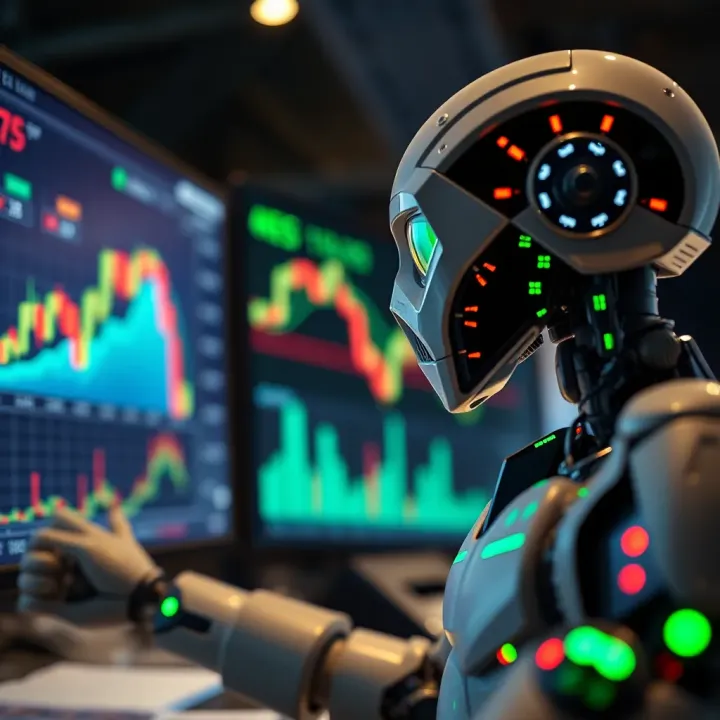
How Trading Robots Work in Financial Markets
🤖 Discover how trading robots automate your investments, their pros, cons, and tips for smart use in financial markets. Learn strategies & risk management!
Edited By
Edward Bennett
Trading bots have quietly taken a front-seat in many financial markets, especially with the surge in online trading platforms. If you've dabbled in stocks, forex, or cryptocurrencies, chances are you've heard about these automated tools. But what exactly are trading bots, and how do they actually work? More importantly, why should traders and investors in Pakistan care?
This article cuts through the noise to explain the nuts and bolts of trading bots. Whether you're a seasoned trader, a finance student, or someone looking to get a foothold in modern market strategies, we'll discuss how these bots operate, the strategies they use, and what risks come with putting your money on autopilot. We’ll also touch on specific considerations tailored for the Pakistani market, like regulatory aspects and platform choices.
In the chapters ahead, expect clear examples, practical tips, and a critical look at both the upsides and pitfalls. By the end, you should have a well-rounded understanding that helps you decide if automated trading might fit your investment approach or trading style.
Automated trading is not magic; it's a tool. Knowing how and when to use it makes all the difference.
Trading bots have become a hot topic, especially for traders and investors keen on automating parts of their workflow. This section lays the groundwork for understanding what trading bots are, why they matter, and how they've evolved. Knowing the basics helps you see how these tools fit into the bigger picture of financial trading.
Automation in trading isn’t just a buzzword; it’s a shift changing how trades get executed day to day. Think of it like having a digital assistant who sifts through mountains of market data much faster than any human could, spotting opportunities or risks in real time. For investors in Pakistan, where markets can move unpredictably due to local and global factors, this speed and efficiency aren’t just perks—they're necessities.
Understanding the different facets of trading bots empowers you to make smarter decisions—whether you’re someone testing the waters with smaller trades or a pro looking to free up time and reduce emotional bias in your strategy.
A trading bot is basically software programmed to follow predefined rules and perform trades automatically. Imagine you want to buy shares of a company when its price drops below a certain level, or sell if it rises above another — a trading bot would do that for you without needing to sit glued to your screen.
These bots analyze market data like price, volume, and trends, then place orders on your behalf. For example, a bot could be set to monitor oil prices during trading hours and execute trades within milliseconds once a profitable pattern emerges. This hands-off approach helps ensure you don’t miss chances just because you were sleeping or stuck in a meeting.
Trading automation goes back decades but has picked up steam with computer and internet advances. In the early days, traders relied on simple computer programs that executed basic instructions but lacked flexibility. Fast forward to today, you've got highly sophisticated bots using complex algorithms and even machine learning to adapt to changing conditions.
Back in the 1980s, mechanical trading systems started gaining traction, but they were limited and mostly for institutional players. By the 2000s, retail platforms like MetaTrader introduced accessible bot development, letting everyday investors join the game. Now, in Pakistan and elsewhere, it's common to see bots integrated directly into popular brokers’ platforms, handling everything from technical analysis to order execution seamlessly.
"Trading bots have evolved from basic rule-followers to advanced systems capable of analyzing multiple data points simultaneously, making them invaluable for competitive markets."
This evolution matters because it means traders can achieve a level of precision and speed impossible with manual trading. But it also raises questions about dependency on technology and potential risks, which we'll unpack in later sections.
Understanding how trading bots operate is essential for anyone interested in automated trading, especially in fast-moving financial markets like those in Pakistan. These bots make thousands of decisions in seconds, far quicker than any human could. Knowing the nuts and bolts helps traders use them effectively and avoid common pitfalls.
The core of any trading bot includes three fundamental parts: data input and market analysis, order execution, and risk management. Each plays a crucial role in making the bot functional and reliable.
Trading bots start by gathering vast amounts of data from market sources — think price feeds, order books, news, and even social media sentiment at times. This input is vital; it feeds the bot’s analysis engine, which identifies patterns or signals to act on. For example, a bot might look for sudden price spikes or dips in the Karachi Stock Exchange to trigger a buy or sell.
Without accurate and timely data, a bot is just guessing. That’s why many bots connect directly to exchanges’ APIs for real-time information and use complex filtering to trim out noise. In practice, this means if the bot spots a moving average crossover in a stock like Pakistan Petroleum Limited (PPL), it can recognize a potential trend change and prepare to trade accordingly.
Once the bot decides on a trade, it moves to order execution — placing buy or sell orders in the market automatically. This process is lightning-fast, often finishing in milliseconds. It saves traders from missing chances, especially during volatile sessions.
Say the bot notices a dip in the value of a stock like Habib Bank Limited (HBL). It can instantly send an order to buy in anticipation of a rebound. Bots can also split large orders into small chunks to avoid slippage and reduce market impact, a tactic known as order slicing. This feature is especially useful for institutional traders or high-volume retail traders who want to avoid driving prices against themselves.
No trading system is perfect, and bots must have controls to manage losses and guard capital. This includes setting stop-loss limits, controlling position sizes, and avoiding trades during highly uncertain times.
For instance, a bot trading on the Pakistan Stock Exchange might be programmed to close positions if the loss exceeds 2% of the total capital. It can also pause trading if the market is unusually volatile, like during a political event causing erratic moves. These checks prevent runaway losses and ensure the bot sticks to a disciplined approach rather than trading recklessly.
Algorithms are the brains behind trading bots. They use predefined rules or complex models to decide when to buy or sell. These rules can be simple, like "buy when price crosses above the 50-day moving average," or highly sophisticated, utilizing statistical models or machine learning to adapt to changing market conditions.
In Pakistan’s market context, algorithms might be adjusted for local conditions like lower liquidity or frequent market holidays. A bot might skip trades if volume is too low, avoiding getting stuck in positions hard to exit.
Algorithms also help manage multiple tasks simultaneously—scanning multiple stocks, analyzing market trends, and executing trades — all without human fatigue or bias. This precision and speed are what make trading bots invaluable tools.
Remember: A well-designed algorithm is the difference between a profitable bot and one that just throws money away.
In summary, trading bots combine rapid data collection, smart algorithms, and disciplined execution to navigate markets more efficiently than humans. By understanding these inner workings, traders can better trust and optimize automated strategies.
Understanding the different types of trading bots is key for anyone looking to tap into automated trading. These bots vary in strategy and purpose, each suited to specific market conditions and trading goals. For someone in Pakistan or anywhere else, knowing these types helps avoid confusion and focus on what fits your style best.
Trend following bots are pretty straightforward. They try to catch big market moves by buying when prices are rising and selling when they are falling. Think of it as jumping on a bandwagon that’s picking up speed. For example, a bot might buy shares in Pakistan Stock Exchange companies when their price crosses a moving average, signaling an upward trend.
These bots rely heavily on past market behavior to predict the future. They don't try to guess tops or bottoms; instead, they ride the waves. One downside: they can get caught in choppy markets, leading to small losses. Still, for traders who prefer steady, less complex approaches, trend followers offer a manageable entry point into bot trading.
Arbitrage bots profit by exploiting price differences for the same asset across different exchanges. Picture this: Bitcoin might sell for 4,500,000 PKR on one exchange and 4,510,000 PKR on another. Arbitrage bots quickly buy low on one and sell high on the other, aiming to pocket the difference.
These bots need lightning-fast execution and access to multiple platforms. In Pakistan's fast-evolving crypto market, arbitrage bots can find opportunities due to varying liquidity and local demand. But, the window is often very short, and fees or delays can eat up profits. Hence, these bots work best for traders with access to low-cost, efficient infrastructure.
Market making bots aim to keep the market liquid by constantly placing buy and sell orders near the current price. They earn from the gap between the buying price (bid) and the selling price (ask), known as the spread. Imagine a bazaar vendor offering to buy and sell strawberries, making a profit on every exchange.
In practice, these bots are crucial in markets with less volume, such as smaller Pakistani stocks or niche cryptocurrency pairs. By providing liquidity, they help smooth out price swings and ensure trades can happen more easily. However, market makers must manage risk carefully, as sudden price moves can lead to losses if their orders get filled unfavorably.
Each type of trading bot serves a distinct role, and picking the right one aligns with your trading goals, risk appetite, and the market environment. Whether you want to follow trends, snag arbitrage profits, or provide market liquidity, understanding these options is your first step toward effective automated trading.
Trading bots rely on well-planned strategies to make buy or sell decisions quickly and effectively. These strategies determine how bots analyze market data and execute trades with little human interference. Knowing these strategies helps traders choose or customize bots that suit their goals and risk tolerance.
Common strategies fall into two main camps: technical analysis based and statistical arbitrage. Technical analysis uses historical data patterns to predict price movements. Statistical arbitrage focuses on price inefficiencies between related assets.
Understanding these approaches gives traders a clearer picture of how automated decision-making happens and the logic behind bot trades. Applying this knowledge in markets like Pakistan’s can help avoid costly mistakes and enhance trading results.
Technical analysis strategies help trading bots spot trends and predict short-term price swings by examining past market data. These methods depend on mathematical indicators to make sense of price charts. Here are some frequently used techniques:
Moving averages smooth out price data by averaging prices over a given period, helping bots identify trends without being distracted by daily noise. For example, a 50-day moving average tells you the average closing price over the last 50 trading days. Bots use this to determine whether to buy or sell.

A common use is the "moving average crossover" strategy, where a short-term average (like 10-day) crosses above a longer one (like 50-day), signaling an upward trend to buy. When it crosses below, it signals a downward trend to sell. This method is straightforward and effective for many traders.
RSI measures how strong recent price changes are, indicating whether a stock or asset is overbought or oversold. Values above 70 suggest overbought conditions (possible price drop soon), while below 30 points to oversold (potential price rise).
Trading bots use RSI to avoid buying at a price peak or selling at a bottom. For example, if the RSI hits 75, the bot might delay buying, waiting for a price correction. On the flip side, an RSI below 30 could trigger a buy signal, anticipating a bounce back.
Bollinger Bands create a dynamic range around price movements using standard deviations from a moving average. The bands expand and contract as volatility changes. When price hits the upper band, it may be seen as high or overbought, while the lower band indicates oversold.
Bots use these bands to time entry and exit points. Suppose a stock touches the lower band but begins to move back inside. This bounce can signal a buying opportunity. Conversely, touching the upper band followed by a reversal can prompt selling.
These technical tools give trading bots practical ways to react to market conditions without waiting for manual input.
Statistical arbitrage (StatArb) involves exploiting price differences between related assets that typically move in sync. Bots scan vast markets to find temporary mispricings, quickly buying undervalued assets and selling overvalued ones.
For example, a pair of stocks in the same industry historically shows correlated movements. If one stock suddenly drops while the other stays steady, the bot can short the steady one and buy the dropped one, expecting prices to realign.
StatArb depends heavily on data analysis and fast executions. It suits high-frequency trading and requires solid computational power and access to real-time data.
Statistical arbitrage is like catching a fish in a narrow stream—quick, precise actions yield profits, but timing is everything.
This strategy isn’t as intuitive as technical analysis but can earn steady returns in efficient markets common in Pakistan’s growing financial scene, especially with modern infrastructure improving access to data and trading platforms.
In summary, trading bots use a mix of technical indicators and statistical methods to make split-second decisions. Knowing these strategies helps traders understand bot behavior and select the right tools to suit their trading style and local market conditions.
Trading bots offer several key advantages that can significantly improve trading outcomes, especially in fast-moving markets like those in Pakistan. They bring speed, precision, and consistency to trading—qualities that are often hard for humans to maintain. Understanding these benefits helps traders see why automation has gained such popularity.
One of the biggest draws of trading bots is their lightning-fast reaction time. Unlike humans, bots can process tons of market data and execute orders within milliseconds. This speed matters when prices shift in the blink of an eye, such as during volatile sessions on the Pakistan Stock Exchange or in cryptocurrency markets.
For example, a bot set to spot arbitrage opportunities between Pakistan’s stock exchanges and international markets can instantly place trades to capitalize on price differences before they vanish. No human could react reliably that fast, especially during off-hours or sudden market swings.
Bots handle repetitive tasks effortlessly, freeing traders from constant screen-watching. This efficiency means you can run multiple strategies simultaneously without missing a beat, maximizing exposure and potential profits.
Human emotions like fear, greed, and impatience often lead to bad decisions—think of holding onto a losing position too long or rushing to buy after a hype. Trading bots remove this emotional rollercoaster by sticking strictly to predefined rules.
For instance, a bot using a moving average crossover strategy won’t hesitate to sell when the signal appears, even if the trader’s gut tells them to hold on. This disciplined execution tends to improve long-term performance by avoiding impulsive mistakes.
Moreover, bots don’t get tired or stressed, so they maintain consistent behavior no matter how choppy the market looks. This quality is especially valuable for traders in Pakistan who might be managing trading alongside other commitments, ensuring they don’t miss critical market moves or fall prey to knee-jerk reactions.
Using trading bots offers a practical edge: they combine speed, consistency, and emotion-free trading to help navigate today's fast and complex financial markets.
By leveraging these benefits, traders can improve precision, manage risk better, and potentially boost overall returns with less manual effort and stress.
Using trading bots can be tempting because of their promise of automation and efficiency. However, it’s vital to remember that these bots come with their own set of risks and limitations. Ignoring these could lead to unexpected losses or missed opportunities. In this section, we'll break down some important pitfalls traders and investors should keep an eye on.
Trading bots operate based on algorithms and predefined rules, but financial markets are often anything but predictable. Sudden price swings, news events, or unexpected market behavior can fool even the smartest bots. For example, if a bot is designed to react to price momentum, a burst of sudden volatility might trigger a series of rapid trades, leading to losses instead of gains.
In Pakistan's market, where liquidity can sometimes be thin and news-driven events cause abrupt movements, bots must be carefully programmed to handle such fluctuations. Without proper safeguards, bots might end up chasing the market wildly or holding onto losing positions during crashes.
No software is flawless, and trading bots are no exception. Bugs, server outages, or connectivity problems can cause a bot to malfunction at crucial moments. Imagine a bot stuck in a loop placing orders unintentionally or failing to cancel an order when intended. This can happen if the bot’s code isn’t thoroughly tested or if the bot’s vendor doesn’t maintain the system.
For instance, in 2017, a popular trading platform experienced a bot glitch that caused huge unexpected trades, leading to massive losses for some traders. To avoid this, always monitor your bot’s performance, and choose platforms known for stability and support.
Over-optimization happens when a trading bot is tailored too closely to past market data. While this might show impressive results in backtesting, the bot can struggle when faced with live market conditions. It’s like training for one exam paper only and flunking every other test.
False signals can also trick bots into making poor decisions. Say a bot relies heavily on a technical indicator like the RSI (Relative Strength Index). During certain market conditions, RSI might give fake signals, showing overbought or oversold conditions inaccurately. Bots blindly following such signals can make losing trades repeatedly.
It’s crucial to balance algorithm complexity with adaptability. Don't expect a bot to read tea leaves; trust comes from continuous evaluation and adjustment to real-world behavior.
By understanding these risks — market volatility, technical glitches, and strategy limitations — traders can better prepare and manage their bots for smoother, safer trading. Always remember, a bot is a tool, not a magic crystal ball!
Picking the right trading bot isn't just about finding software that can make trades for you; it's about matching a tool to your style, goals, and budget. Not all bots suit everyone—so understanding what you want to get out of trading will save you time and money down the line.
Before diving into bot options, it’s crucial to get clear on your trading goals. Are you aiming for steady, low-risk returns or are you comfortable with high volatility for a chance at bigger profits? For instance, if you’re a cautious investor in Pakistan’s stock market, a bot designed for trend following or market-making might suit you better than a high-frequency arbitrage bot that demands quick decision-making and constant monitoring.
Setting realistic expectations also matters here. Some traders focus on passive income through bots that automate well-known strategies with minimal intervention. Others prefer more active bots that require frequent adjustments and offer greater control. Your goals will impact which bot features matter most—such as how customizable it is or if it offers advanced analytics.
Once you’ve nailed down what you want, the next step is digging into how a bot performs. This means looking beyond flashy marketing and checking real user reviews, backtesting results, and credible performance reports. For example, the MetaTrader 5 platform is popular because it provides transparency and a vast community for feedback, helping traders gauge bot effectiveness in real conditions.
Reputation also plays a big role. Bots developed by well-known teams or companies tend to have fewer bugs and better customer support. If a bot promises unrealistic returns without showing past performance data or user experiences, that's a red flag. Remember, trust is key when you’re handing over control of your trades.
Cost can be a dealbreaker, especially for beginners or small investors. Trading bots come in various price ranges—from free open-source bots like Gekko to premium subscriptions like those offered by 3Commas or Cryptohopper. Sometimes, paying for a bot with solid support and regular updates saves you headaches later.
Accessibility is just as important. Does the bot support the exchanges you want to trade on? For instance, many bots connect easily with Binance and KuCoin, popular choices in Pakistan, but might not support local exchanges or specific brokerage accounts. Also, consider the user interface: is it beginner-friendly or does it require some coding knowledge?
Selecting the right trading bot means balancing your personal goals, the bot’s track record, and how much you’re willing to invest—both in cost and time to learn.
Making an informed choice can turn automated trading from a gamble into a strategic tool. Take the time to research and test before fully committing, and remember, the best bot is the one that fits your unique trading style and needs.
Understanding the legal and ethical landscape surrounding trading bots is essential for anyone involved in automated trading. In many financial markets, including Pakistan's, regulations can be a bit tricky to navigate, but ignoring them can lead to serious repercussions. Using trading bots responsibly means not only following the rules but also maintaining transparency and trust in the market.
Pakistan’s financial market regulations are still evolving when it comes to automated trading, but the Securities and Exchange Commission of Pakistan (SECP) keeps a close eye on developments. As of today, there isn’t a specific, detailed framework exclusively for trading bots, but existing rules under the SECP’s jurisdiction apply. For instance, algorithms must comply with anti-market manipulation laws to avoid unfair trading advantages or disrupting market integrity.
Pakistani traders and firms using bots should also watch for regulations related to data privacy and cybersecurity. Since trading bots rely on vast amounts of financial data and sometimes personal info, storing and handling this data securely is a legal must.
A practical example: If a bot performs arbitrage by exploiting momentary price differences across exchanges, it might be fine if transparent and fair. But if the bot exploits insider information or operates in a way that creates false market signals, it could attract regulatory action.
Being transparent about how your trading bot operates and sticking to compliance requirements isn't just about avoiding fines—it’s about building credibility. Transparency means documenting your strategies clearly, understanding potential conflicts of interest, and maintaining accurate records of trades executed by the bot.
For traders in Pakistan, abiding by capital market laws requires clear reporting to authorities and, if applicable, disclosing automated trades to brokers or regulatory bodies. Transparency also helps in detecting and correcting faults early, such as a bug causing unintended trades.
"Without clear oversight and accountability, bots can unintentionally add chaos to markets." Keeping your trading activities above board benefits both you and the wider trading environment.
Some points to consider for compliance:
Make sure your bot follows exchange terms and avoids banned practices like spoofing or layering.
Regularly update your bot’s security to protect against hacking.
Conduct audits to ensure your trading algorithms perform within legal and ethical boundaries.
While Pakistan’s regulatory space for trading bots might still be under development, proactive adherence to compliance can save headaches later. Plus, showing clients or fellow traders a commitment to ethical algorithmic trading fosters trust and long-term success.
Navigating legal and ethical considerations might seem complex at first, but focusing on these principles will keep your trading bot effective and above reproach.
Setting up and customizing a trading bot might seem like a daunting task, especially if you’re new to automated trading, but this step is critical for success. It’s not just about picking any bot and letting it loose on the markets—customizing your bot ensures it aligns with your trading goals, risk tolerance, and the specific market conditions you want to navigate. In Pakistan's financial scene, where market behavior can differ from global trends, tailoring your bot to local dynamics adds an edge.
A common mistake traders make is relying solely on default bot settings, which are often too generic. That’s why getting hands-on with the configuration lets you adjust your strategy’s levers—think of it as fine-tuning an engine to get the best performance. For example, if you’re using a trend-following bot, you might want to modify how sensitive it is to price movements or set stricter stop-loss levels to protect your capital during sudden market swings.
Setting up involves more than just parameters. It also means understanding how much risk you’re willing to take, which markets you'll target, and how the bot fits into your broader investment plan. With the right tweaks, your bot can be a powerful assistant, handling trades around the clock without emotional bias. But remember, effective customization demands periodic review and adjustments based on how markets evolve and how your own preferences shift.
One of the first things to tackle when setting up a trading bot is configuring its parameters and risk controls. These are the backbone of your bot’s behavior, dictating when and how it executes trades. Parameters can range from technical indicators (like moving averages) to trade size limits or entry and exit criteria.
Risk controls prevent your bot from going off the rails during volatile periods. For instance, setting maximum daily loss limits stops the bot from draining your account if the market suddenly dives. Many platforms let you specify stop-loss and take-profit targets, letting the bot exit trades automatically to secure gains or prevent big losses.
Take the example of a Pakistani trader using the MetaTrader 5 platform with a customized bot. By setting a maximum drawdown limit of 5% per day and a trade size of 2% of the account balance, the trader controls risk tightly. Should the market turn choppy, the bot halts trading automatically, preserving capital for better opportunities.
Using risk controls like "time-based exit" is also popular—say the bot closes all positions if they take too long to become profitable. This avoids capital being tied up too long in weak setups. These kinds of granular controls require you to think through your risk appetite and market outlook carefully.
Before letting a trading bot loose on real money, backtesting is not optional—it's essential. Backtesting means running your bot’s strategy against historical market data to see how it might have performed.
This helps weed out errors in logic and shows whether your chosen parameters hold up when the markets aren't playing nice. For instance, a bot that works great in a bullish market could suffer steep losses in sideways or bearish phases. Historical data from the Pakistan Stock Exchange or currency pairs like USD/PKR can provide relevant scenarios to test against.
A practical example would be using software like TradingView or MetaTrader’s built-in backtester. You could test a trend-following bot’s parameters over the past two years of the Karachi Stock Exchange. You might discover that adjusting the moving average periods improves the win rate, or that the bot performs better when combined with RSI signals.
Backtesting reveals blind spots and helps optimize strategies without risking capital. However, no backtest is perfect—markets change, and past results don't guarantee future success. That's why it’s wise to start live trading with small amounts while monitoring your bot closely, ready to tweak settings as needed.
Properly setting up and customizing your trading bot, combined with thorough backtesting, can make the difference between a frustrating experience and a powerful trading tool. The goal is not to set it once and forget it, but to stay engaged and adapt as conditions change.
When you set up a trading bot, it's not a "set it and forget it" situation. Ongoing monitoring and maintenance are vital to keep the bot performing well, especially since financial markets are super dynamic. Regular checks ensure the bot sticks to your trading goals, adapts to market conditions, and avoids costly mistakes.
Regular performance reviews are like health check-ups for your trading bot. Consistently evaluating how the bot executes trades helps catch slips before they snowball. For example, if a bot built to capitalize on short-term price swings starts underperforming for a week, it signals time to dig in and diagnose.
Checking metrics like win/loss ratio, average return per trade, and drawdown provides a clear picture. Suppose a bot on the Pakistan Stock Exchange begins showing significantly higher drawdowns compared to its historical average—this might mean the underlying strategy no longer suits the market conditions or there's a bug affecting execution.
To make sure these reviews are productive, document all changes and performance observations systematically. Using dashboard tools like TradingView or custom-built scripts can help track metrics over time, making pattern spotting easier. This practice keeps you proactive instead of reactive.
Frequent performance checks prevent small hiccups from turning into major losses.
Markets don’t stay put—regulations, economic events, or sudden volatility shifts can throw off trading bots if they're left on autopilot. Adjusting your bot to align with new market realities is critical.
For example, during Pakistan’s rapidly changing political landscape, currency fluctuations can affect forex and stock markets. A trading bot optimized on historical data might misread signals if it doesn’t consider such macro events. Tweaking algorithm parameters or updating data inputs becomes essential here.
Also, seasonality and news cycles differ across markets. A bot trading commodity futures on the Karachi Commodities Exchange may require parameter adjustments around harvest season or import bans. Without these tweaks, the bot might generate false signals that lead to unnecessary losses.
In practical terms, this means setting up alerts for relevant market news and scheduling periodic algorithm reviews. You might want to simulate different scenarios using backtesting tools to see how the bot responds to new conditions before applying changes in real trading.
Maintaining a flexible approach helps your trading bot stay sharp and responsive rather than stale and risky.
Staying hands-on with monitoring and adapting your trading bot ensures it remains a reliable assistant in navigating Pakistan’s financial markets rather than a liability. Regular performance reviews paired with timely adjustments keep your automated strategy aligned with your investment goals and the ever-changing market pulse.
The future of trading bots is a hot topic among traders and investors because these tools are becoming more integrated and sophisticated. As markets grow faster and more complex, having bots that can keep up—or even anticipate changes—can be a real edge. This section digs into where trading bots are heading and what this means for the players involved, especially those in Pakistan. It’s not just about shiny tech but practical benefits and challenges that come with these advances.
Artificial intelligence (AI) and machine learning (ML) are at the forefront of new developments in trading bots. Unlike the old school bots that followed fixed rules, AI-powered bots learn from vast amounts of market data, identifying patterns that humans or simpler algorithms might overlook. For example, some bots now analyze sentiment from Twitter or news headlines to predict short-term market swings—a feature particularly useful in volatile markets like cryptocurrency.
One remarkable trend is the use of reinforcement learning, where bots improve through trial and error using simulated trading environments. Think of it like a young chess player practicing different openings over and over. These bots adapt dynamically, meaning they can adjust strategies as market conditions change, rather than sticking to one set plan.
However, these sophisticated bots require significant computational resources and expert knowledge to develop and maintain, meaning gradual adoption in Pakistan’s retail trading scene but growing interest among institutional traders.
The rise of smarter trading bots affects markets and traders in a few notable ways. First, markets become more efficient as bots quickly exploit arbitrage opportunities or price discrepancies across exchanges, making it harder for manual traders to nab easy profits. In Pakistan, where market liquidity can be lower, the presence of bots might improve trade execution speeds and price accuracy.
Yet, this speed and automation can sometimes intensify market swings, as multiple bots react simultaneously to the same signals. This phenomenon, called "flash crashes," happened globally and could be more pronounced in smaller markets with less oversight.
For traders, this means a shift in how they operate. Manual traders need deeper strategy tweaks or use bots themselves to compete. On the flip side, traders who understand AI and algorithmic trading have opportunities to innovate, customizing bots for specific goals like hedging currencies or trading local stocks.
These developments suggest a future where understanding and using trading bots will be less optional and more essential for active traders looking to stay ahead.
In summary, the future of trading bots looks promising but also intricate. As AI drives smarter automation, markets in Pakistan and worldwide will see increased efficiency alongside new challenges. For traders and investors, staying informed and adapting to these tech trends will be key to making the most of what’s coming next.
🤖 Discover how trading robots automate your investments, their pros, cons, and tips for smart use in financial markets. Learn strategies & risk management!
Discover how Trade View shapes market decisions with detailed data tools, user-friendly interface, and insights for traders in Pakistan & beyond 📊🌍
📈 Discover how to trade cryptocurrency in Pakistan with tips on top platforms, legal rules, trading methods, and smart risk management for safe investing.
Explore the best trading platforms for Pakistani traders 📈. Compare fees, features, security, and support to find a platform that suits your needs safely.
Based on 6 reviews