
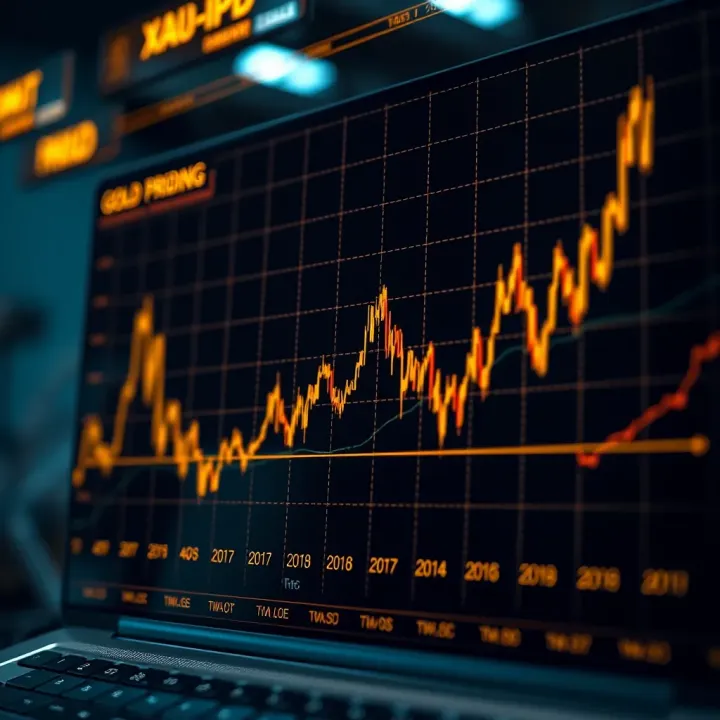
Gold Price Forecast: Key Drivers of XAU/USD
📈 Explore key factors like economic indicators, geopolitical events, and technical analysis shaping XAU/USD gold prices. Get insights for smart trading decisions.
Edited By
Amelia Brooks
Gold has always held a special place in Pakistani portfolios—not just for its intrinsic value but also as a hedge against economic uncertainty and rupee fluctuations. As we look to the coming week, the gold price outlook depends heavily on several moving parts, from global economic signals to local market sentiment.
The next week’s price movements will reflect a tug of war between international factors and domestic influences. For instance, rising inflation rates in the US tend to push investors towards gold as a safe haven, while any signs of stability or interest rate hikes by the Federal Reserve can dampen gold’s appeal. Meanwhile, currency dynamics, especially the Pakistani rupee’s exchange rate against the US dollar, remain a crucial factor. A weaker rupee generally lifts gold prices locally, making it costlier but more attractive for investors looking to store value.
Geopolitical tensions—whether in the Middle East or within South Asia—can create sudden spikes in gold demand as uncertainty grows. Investors and traders should watch developments closely, as even a small flare-up can trigger quick price swings.
Central bank policies, including those of the State Bank of Pakistan (SBP), are also under scrutiny. Any moves on interest rates or foreign exchange reserves influence liquidity and investor confidence. For example, if SBP hikes rates to control inflation, it might reduce gold’s appeal compared to interest-bearing assets.
In practical terms, gold traders and investors should keep an eye on:
US economic data releases (inflation figures, employment reports) scheduled for the week
Pakistani rupee performance against the US dollar
News on regional security and political stability
Statements or policy actions from the Federal Reserve and SBP
This multifaceted approach will help investors position themselves better for the week ahead rather than relying solely on past trends. Understanding these key indicators will enable more informed decisions—whether to buy, hold, or sell gold in Pakistan’s evolving market conditions.
With gold prices known for sudden jolts, staying informed on these fronts is not just useful, it’s necessary for anyone serious about trading or investing in the yellow metal.
Understanding the current gold market conditions is essential for forecasting prices accurately. This section sets the stage by presenting the latest price trends worldwide and zooming into factors unique to Pakistan. These insights help traders, investors, and finance professionals grasp the environment shaping gold's movement and position themselves wisely ahead of the coming week.
Price movements over the past month have shown some volatility mixed with cautious gains. Globally, gold hovered around the USD 1,950 to USD 2,000 per ounce range, reflecting jitters over inflation and mixed signals from central banks. This matters because such fluctuations affect decisions by investors looking to either enter or exit gold holdings. For instance, a sudden dip below USD 1,950 could spark increased buying as a safe haven.
The influence of major markets like the US, China, and India cannot be overstated. The US dollar's strength, tied to Federal Reserve moves, heavily sways global gold prices. Meanwhile, China's push for gold imports amid slower economic growth signals steady demand, adding support. India's seasonal demand, especially around festivals and weddings, also lifts prices occasionally. These markets act as barometers; when they shift, the ripple reaches Pakistan's gold market swiftly, impacting import costs and investor sentiment.
The role of jewellery and cultural demand is a strong local driver. Gold jewellery purchases peak during wedding seasons and religious festivals like Eid. This cyclical pattern keeps demand relatively robust despite price swings. For example, during recent wedding festivities, gold sales in Karachi's Saddar and Lahore's Liberty markets remained strong, even with a weakening rupee. Traders keen to time their buying can expect these cultural cycles to keep gold in steady demand.
Impact of PKR fluctuations on gold imports is another critical concern. Since gold is globally priced in dollars, a depreciation of the Pakistani rupee (PKR) directly raises costs for importers. Recent PKR volatility against the US dollar increased the landed cost of gold, which dealers pass on to consumers. This pressure can temporarily suppress demand or delay purchases by consumers expecting further rupee weakening. On the other hand, sharp rupee declines often push investors toward gold as a hedge, stirring demand.
Monitoring these global and local dynamics together offers investors in Pakistan a clearer perspective on gold price directions. It shows how broad factors and regional details mix to shape market behaviour.
Key points to watch:
Global price bands USD 1,950–2,000 per ounce
US, China, India’s demand and currency impact
Seasonal jewellery buying spikes
PKR exchange rate swings affecting import costs
Keeping these in view equips you with practical knowledge for smart trading decisions next week.
Economic indicators often set the tone for gold price movements in the short term. Investors in Pakistan closely watch these signals, as they provide clues about inflation, interest rates, and currency trends that directly impact the demand and cost of gold. Understanding these factors helps traders and investors make informed decisions regarding buying or selling gold.
Inflation both globally and in Pakistan influences gold prices significantly. When inflation rises, particularly at an accelerating pace as Pakistan has experienced with consumer price index increases recently crossing double digits, gold tends to become more attractive. This happens because gold is often seen as a hedge against eroding purchasing power. For example, during the last quarter, spikes in inflation globally due to supply chain disruptions saw a corresponding rise in gold demand.
Interest rates, controlled by central banks like the State Bank of Pakistan (SBP) and the US Federal Reserve, also affect gold prices. Higher rates usually raise the opportunity cost of holding non-interest bearing assets like gold, putting downward pressure on its price. The SBP recently held its policy rate steady amid inflation concerns, while the US Federal Reserve signalled possible rate hikes to combat inflation, pushing the US dollar higher and indirectly influencing Pakistani gold markets. These moves can create mixed effects, making it vital for market participants to factor in both domestic and international monetary policies.
The strength of the US dollar against the Pakistani rupee plays a key role in shaping gold prices locally. Since gold is priced in dollars globally, a stronger dollar often translates to higher rupee costs for gold imports. For instance, when the dollar surged beyond Rs 280 recently, Pakistan saw a noticeable uptick in local gold prices as traders adjusted for the increased import expense.
Exchange rate volatility impacts investor behaviour considerably. Frequent and unpredictable swings in the rupee-dollar rate prompt investors to seek safe assets like gold to protect against currency depreciation risk. This behaviour was visible during last year’s sharp PKR fluctuations, where gold demand surged ahead of festive seasons. Therefore, currency stability—or lack thereof—often dictates the timing and volume of local gold purchases.
Economic indicators like inflation, interest rates, and exchange rates work together to influence gold prices. Keeping a close eye on these can help investors in Pakistan anticipate price trends and plan their trades accordingly.
By following these economic signals, traders can better navigate the short-term landscape of gold prices while aligning their strategies with underlying market realities.
Gold prices often respond quickly to shifts in global politics and unrest, since investors see gold as a safe option when uncertainty rises. Understanding recent geopolitical developments helps traders and investors gauge whether demand for gold will ramp up or cool down in the coming week.
Any unrest or military conflicts in key regions usually push gold prices higher due to increased safe-haven buying. For example, tensions in the Middle East or Eastern Europe can unsettle markets and prompt investors to move capital into gold, which retains value during crises. The ongoing conflict in Ukraine has kept safe-haven demand alive, supporting gold prices globally.
In Pakistan’s context, these international conflict zones may seem distant, but they directly influence global risk appetite, exchange rates, and import costs for gold. When global tensions rise, PKR often weakens alongside emerging market currencies, further fuelling gold’s appeal as a store of value locally.
Trade tensions or new agreements between major economies like the US, China, or the EU can shift gold prices through market sentiment and currency fluctuations. For instance, renewed trade talks between the US and China might ease fears of global slowdown, reducing gold demand, while escalation in tariffs tends to push prices up.
Recently, any friction seen at forums like the G20 or WTO discussions may affect commodity markets, including gold. Pakistani investors should watch how these trade developments influence the rupee’s strength and dollar movements, as they have a direct bearing on domestic gold prices.
Upcoming political events like elections in major economies or summits between powerful nations can create volatility in gold markets. Investors tend to hold back or flock towards gold, depending on anticipated outcomes.
An example is the scheduled US Federal Reserve meeting or an election in a country with significant economic influence. Such events may trigger cautious behaviour in currency and equity markets, giving gold a price boost as it provides an alternative investment during uncertain times.
Keeping an eye on these global political calendars can help local investors plan the timing of their gold trades better, especially given the sensitivity of Pakistan’s market to external shocks.
In short, geopolitical tensions and political events provide essential clues for predicting gold price movement in the short term. Being aware of these developments allows Pakistani investors and traders to act strategically rather than reactively.
Technical analysis and expert opinions play a key role in predicting short-term gold price movements. Traders and investors rely on these tools to understand price patterns, spot potential turning points, and assess market momentum. This section highlights the technical indicators to watch next week and provides insights from market professionals and financial institutions, helping readers make smarter decisions on gold investments.
Support and resistance levels are essential for understanding price behavior. Support represents a level where buying interest tends to step in, preventing prices from falling further. Resistance refers to a price point where selling pressure may halt upward momentum. For example, if gold prices have bounced multiple times near $1,900 per ounce, that level becomes a support. Conversely, if prices struggle to break above $1,950, that marks resistance. South Asian traders, including in Pakistan, closely watch these levels to time entry or exit points, reducing losses during volatile days.
These levels provide practical reference points in times of uncertainty. If prices approach support but fail to hold, it may signal a further decline. On the other hand, a strong break above resistance could mean the start of an upward trend. Hence, identifying these zones helps investors avoid rash decisions based purely on short-term noise.
Moving to trend lines and momentum indicators, these tools measure the strength and direction of price movements. A trend line connects a series of price lows or highs, showing the general direction over time. If gold prices consistently rise along an ascending trend line, traders interpret this as a bullish signal. Breaking below this line might warn investors that the uptrend is weakening.
Momentum indicators, such as the Relative Strength Index (RSI) or Moving Average Convergence Divergence (MACD), capture the speed of price changes. For instance, an RSI above 70 often points to overbought conditions, suggesting a possible imminent correction. Pakistani investors who follow these indicators can better judge market sentiment and avoid chasing prices at unsustainable highs.
Predictions from commodities experts add another layer to price forecasts. Experts from commodities research firms and trading houses analyse current data, combining technical signals with fundamental factors like economic data or geopolitical tensions. Their insights often reflect nuanced expectations, such as increased gold demand if inflation concerns rise or if global uncertainty intensifies. For example, some analysts recently warned that rising interest rates in the US might temporarily cap gold gains, signalling cautious trading ahead.
Reports from banks and financial bodies like the State Bank of Pakistan or major international banks carry significant influence on market sentiment. These institutions publish regular outlooks incorporating economic indicators and policy updates. When SBP adjusts its monetary stance or when global banks revise their gold forecasts, investors tune in closely. Such reports are particularly useful for Pakistani traders who gauge domestic interest rate shifts and regional market trends. Bank assessments also often influence futures trading volumes and prices on exchanges like the Pakistan Mercantile Exchange (PMEX).
Monitoring both technical signals and expert analyses offers a balanced view, giving you practical guidance to navigate gold price movements next week with confidence and clarity.
For investors in Pakistan, practical advice on gold investment helps navigate the challenges of a volatile market driven by global and local factors. With price fluctuations influenced by currency swings, geopolitical events, and economic policies, well-thought strategies can reduce risks and improve returns. This section offers actionable insights tailored for Pakistani investors aiming to protect and grow their wealth through gold.
Gold prices can swing unexpectedly, especially when the Pakistani rupee faces pressure or international tensions rise. Diversification and hedging techniques help reduce risk by spreading investments across different asset classes or within various forms of gold products. For example, instead of investing only in physical gold jewellery, investors can also consider sovereign gold bonds, gold ETFs, or even gold futures available through local brokerage firms. This mix cushions against sharp drops in any single market segment, as these different instruments react differently to economic events.
Timing purchases during price dips can also manage volatility effectively. Watching price charts and staying updated with global and local news allows investors to identify favourable entry points. For instance, when the rupee weakens suddenly, gold prices in PKR tend to jump. If you purchase immediately after a minor dip caused by positive currency news, you might avoid overpaying during a surge. However, it is wise not to chase the market—steadily accumulating gold during slower price movements often yields better outcomes than rushing into the market during erratic spikes.
Gold traditionally guards against currency depreciation, a frequent concern in Pakistan’s fluctuating economy. When the rupee loses value against the US dollar, the local price of gold usually rises, preserving purchasing power. For example, investors who bought gold during the rupee depreciation in recent years saw their holdings maintain value even as inflation soared. This makes gold an effective tool to protect savings from the erosion caused by economic instability.
Long-term versus short-term investment approaches in gold serve different needs. Long-term holders typically view gold as a safeguard against inflation and currency risk, holding it through ups and downs for potentially several years or decades. Short-term traders, conversely, try to capitalise on price swings by buying low and selling high within weeks or months. Pakistani investors should consider their financial goals and risk tolerance carefully; those seeking safety amid loadshedding and inflation may prefer long-term holdings, while more active traders might watch technical signals to time their moves better.
Effective gold investment in Pakistan balances risk management and market awareness, ensuring your portfolio withstands economic uncertainties and currency fluctuations while seeking growth opportunities.
📈 Explore key factors like economic indicators, geopolitical events, and technical analysis shaping XAU/USD gold prices. Get insights for smart trading decisions.
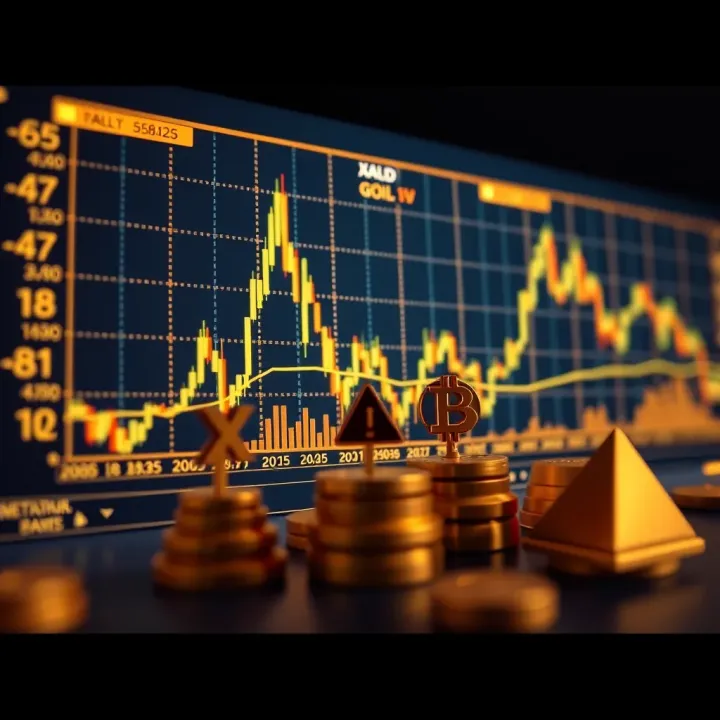
📊 Stay ahead with today's XAUUSD forecast! Explore gold price factors, market signals, economic cues & geopolitical impacts shaping gold vs USD now.
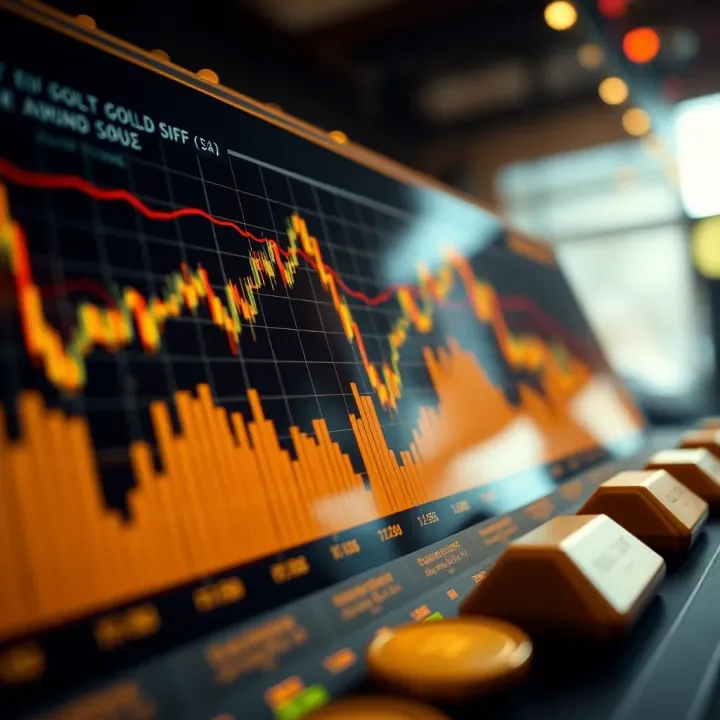
Explore key insights on XAUUSD 💰 with gold price forecasts influenced by economic data, market trends, and geopolitical events for smarter trading decisions in Pakistan.
Explore XRP price forecast in Pakistan 🇵🇰—analyze trends, technology, expert views, and risks shaping its future in crypto markets 📈💡
Based on 12 reviews