
Bitcoin Cash Price Prediction: What to Expect
📈 Discover key factors shaping Bitcoin Cash (BCH) prices, expert insights, market trends, and risks to watch for smart BCH investment decisions in Pakistan.
Edited By
Sophie Reed
Bitcoin's price has always been a hot topic among traders and investors, especially in Pakistan where digital currencies are gaining popularity despite regulatory challenges. Understanding what drives Bitcoin’s value helps investors make smarter decisions in a market known for its wild swings.
Bitcoin price prediction is not about crystal-ball gazing, but analysing real factors like market demand, global economic conditions, policy changes, and technological upgrades. For example, when major countries announce stricter crypto rules, Bitcoin’s price tends to dip. On the other hand, news about international firms accepting Bitcoin can push prices up.
Analysts usually rely on a mix of fundamental analysis and technical analysis. Fundamental analysis looks at broader economic indicators and news – things like inflation rates, foreign investment flows, or a surge in user adoption. Technical analysis studies past price movements and patterns on charts to predict future trends. Tools like moving averages, RSI (Relative Strength Index), and MACD (Moving Average Convergence Divergence) are common in this approach.
For Pakistani investors, local factors also matter. Pakistani Rupee’s exchange rate with the US dollar, government regulations on cryptocurrency trading, and access to platforms like Binance or local exchanges influence how and when to invest. It’s crucial to be aware of the risks, including price volatility and cybersecurity threats, which can affect returns significantly.
Successful Bitcoin investing requires a blend of disciplined research, risk management, and staying updated with both global trends and Pakistan-specific market conditions.
Here are a few points to keep in mind:
Bitcoin’s 24/7 trading makes it highly reactive to breaking news
Regulatory clarity in Pakistan remains uncertain, impacting investor confidence
Technical indicators should be used alongside broader market insights, not in isolation
Diversification reduces risk, so don’t put all your funds into Bitcoin alone
Understanding these elements can prepare you to navigate Bitcoin’s price fluctuations effectively. The following sections will explore detailed prediction methods, current market trends, and practical tips tailored for investors in Pakistan.
Understanding Bitcoin price prediction is essential for anyone looking to invest or trade in cryptocurrency confidently. Prices in Bitcoin can swing wildly within a short period, influenced by a mix of factors unique to blockchain technology and global finance. Knowing what drives these price actions helps investors avoid blind spots and make informed decisions that suit their risk appetite and investment goals.
Market demand and supply The core of Bitcoin's price movement lies in demand and supply. When many investors buy Bitcoin, its price generally rises because the available supply is limited — capped at 21 million coins. Conversely, if more people sell, prices tend to fall. For example, during the hype around BTC peaks in 2017 and 2021, demand surged dramatically. This basic economic principle explains why price bubbles and crashes occur frequently in cryptocurrency markets.
Regulatory developments worldwide and in Pakistan Government policies have a massive impact on Bitcoin prices. Globally, announcements about banning or regulating cryptocurrencies tend to trigger immediate price reactions. In Pakistan, where the State Bank has issued warnings and restrictions on crypto trading through conventional banks, uncertainty remains a significant issue. Investors pay attention to updates from the State Bank of Pakistan and Federal Board of Revenue, as changes in these policies can either encourage or deter market participation.
Technological advancements and network updates Bitcoin's underlying technology evolves with software upgrades and mining advancements, which can also affect its value. For instance, improvements that increase transaction speed or reduce fees often boost investor confidence, pushing prices higher. Conversely, concerns over security vulnerabilities or delays in network updates can make investors cautious, impacting the price negatively.
Technical analysis tools Technical analysis uses historical price and volume data to anticipate future movements. Tools like moving averages help spot trends, while indicators such as the Relative Strength Index (RSI) show if Bitcoin is overbought or oversold. Many Pakistani traders check these signals before deciding to buy or sell, especially on local exchanges.
Fundamental analysis approach Fundamental analysis involves evaluating Bitcoin’s intrinsic value based on external factors like network health, adoption rate, and macroeconomic conditions. For instance, increased merchant acceptance or new large-scale institutional investments often hint at upward price potential, offering a longer-term perspective than technical charts.
Sentiment analysis and social media impact Bitcoin’s price is particularly sensitive to public sentiment expressed via social media platforms and news. Tweets from influential figures, regulatory announcements, or widespread rumours can send prices soaring or plunging within hours. Monitoring social channels is becoming a crucial part of price prediction strategies for investors in Pakistan who want to stay ahead of sudden market swings.
Successful Bitcoin investing depends on understanding both market mechanics and external influences, combining various prediction methods to capture the full picture.
Analysing market trends is essential for anyone aiming to understand Bitcoin’s price behaviour. Market trends reflect how wider economic factors, investor sentiment, and regulatory policies interact with this cryptocurrency. For Pakistani investors, recognising these trends can help navigate the volatile nature of Bitcoin and make better decisions about when to enter or exit the market.
Significant price rallies and crashes have been part of Bitcoin's history since its inception. For example, the surge toward nearly $20,000 in December 2017 caught many investors off guard, followed by a sharp crash lasting over a year. Such dramatic moves highlight Bitcoin’s highly volatile character. Understanding these patterns helps investors avoid panic selling during dips or FOMO-driven buying during spikes. In Pakistan, where investors often operate with limited market data, learning from past rallies and crashes can build discipline and reduce risk.
Bitcoin’s history also shows that crashes tend to follow periods of over-speculation or external shocks like regulatory bans or exchange hacks. Taking note of these cycles gives investors clues about potential market bottoms or tops, aiding in timing investment decisions better.
Correlation with traditional financial markets has varied over time but remains an important trend to watch. For many years, Bitcoin was regarded as uncorrelated to stocks or commodities, acting as a hedge during turbulent global markets. However, recent years have shown increasing overlap, especially during major economic shocks like the COVID-19 pandemic when Bitcoin and stock markets both fell sharply.
This growing correlation means Pakistani investors cannot view Bitcoin in isolation from global financial markets. If the Karachi Stock Exchange or international indicators show instability, Bitcoin prices could reflect similar trends. Conversely, Bitcoin might also provide diversification when local markets underperform, but this relationship is dynamic and must be constantly monitored.
Global economic indicators such as interest rates, inflation, and currency strength affect Bitcoin prices worldwide. For instance, when central banks increase interest rates, investors often prefer fixed-income assets over riskier ones like Bitcoin. The recent hikes in interest rates by the US Federal Reserve triggered a sell-off in crypto markets, including Bitcoin. Pakistani investors should track such global economic shifts because they indirectly influence local appetite for Bitcoin.
Cryptocurrency regulations affecting Pakistan evolve slowly but have a direct impact on investor confidence. The State Bank of Pakistan (SBP) has maintained a cautious stance on crypto, warning about risks but lacking clear legal frameworks. This uncertainty discourages large-scale institutional involvement and affects volumes on local exchanges. Investors must stay updated on any regulatory changes to avoid compliance issues and protect their investments.
Further, taxation guidance from the Federal Board of Revenue (FBR), or the absence of it, creates ambiguity around profits from Bitcoin trading. This can influence how aggressively Pakistani investors participate in the market.
Trends in trading volumes and investor interest in Pakistan point to growing awareness but limited maturity. Local crypto exchanges have reported increased sign-ups, especially among youth, spurred by rising internet penetration and social media hype. However, many traders still lack proper risk management strategies, making markets prone to speculation-driven bubbles.
The rise of mobile payment platforms like JazzCash and Easypaisa has simplified buying cryptocurrencies for retail investors, which boosts volume but also increases susceptibility to impulsive trading. Understanding these evolving local trends helps investors gauge sentiment and avoid herd behaviour that often leads to losses.
Watching market trends closely, from both global and local angles, equips Pakistani Bitcoin investors with timely insights. This reduces guesswork and guides more strategic decision-making in a market known for its unpredictability.
Predicting Bitcoin prices requires using tools that help traders and investors interpret market data effectively. These tools range from traditional technical indicators to advanced machine learning models. Each plays a role in providing insights that guide decision-making, especially in Pakistan where market conditions can be volatile.
Moving averages smooth out price data to identify trends over time. For example, a 50-day moving average shows the average closing price over the past 50 days. Traders often look for crossovers, such as when the 50-day average moves above the 200-day average, signalling a potential bullish trend. This straightforward tool helps investors spot momentum shifts without getting distracted by daily price swings.
Relative strength index (RSI) is a momentum oscillator that measures how overbought or oversold Bitcoin is on a scale of 0 to 100. Typically, an RSI above 70 suggests the asset is overbought and might see a price drop soon, while under 30 indicates oversold conditions and a possible price rise. Pakistani investors can use RSI to time entries or exits, especially in a market susceptible to quick moves due to news or regulations.
Bollinger Bands consist of a moving average with two bands plotted a set distance apart, based on volatility. When Bitcoin's price hits the upper band, it often signals it is trading high relative to recent history, while touching the lower band suggests undervaluation. These bands adjust with market volatility, helping traders spot breakouts or reversals. For instance, a squeeze (narrow bands) may precede sharp price moves, which traders watch closely.
Algorithmic trading strategies use predefined rules to buy or sell Bitcoin automatically, based on patterns or signals detected in market data. These algorithms can execute trades faster than humans, reacting instantly to price changes. Pakistani trading firms or individuals with coding knowledge increasingly adopt these strategies to manage risk and exploit short-term opportunities.
Data-driven forecasting models analyse vast amounts of historical and real-time information, including price, volume, social media sentiment, and even macroeconomic data. Machine learning methods detect complex patterns that humans might miss, refining price predictions. For Pakistani investors, these models offer a more nuanced view compared to traditional analysis, though they require cautious interpretation and continuous updates to remain effective.
Using a mix of traditional technical tools and AI-driven techniques gives investors a balanced approach. While indicators like moving averages and RSI are accessible and well-understood, machine learning adds depth to predictions, especially in volatile markets like cryptocurrency.
In sum, combining these tools enables better-informed investment decisions for those trading Bitcoin in Pakistan, balancing accessibility with sophistication.
Predicting Bitcoin prices comes with its fair share of risks and challenges. Investors need to understand these hurdles clearly, especially in the volatile and often unpredictable crypto market. Being aware of these issues helps traders make informed decisions, spot potential pitfalls early, and manage their risks better.
Price swings and sudden corrections are a hallmark of Bitcoin trading. The digital currency frequently experiences large leaps and drops within short periods, which makes precise price prediction tricky. For example, Bitcoin went through a sharp correction in May 2021, dropping nearly 50% within weeks after a prolonged rally. Such moves can wipe out gains fast, so investors should expect and prepare for these sudden shifts.
These sharp price movements come from various factors like low liquidity at times, speculative trading, or reactions to news. This unpredictability affects both short-term traders trying to capitalise on rapid gains and long-term investors expecting steady growth. Without careful risk management, such price swings could cause substantial losses.
Global geopolitical events also sway Bitcoin's price significantly. Political tensions, trade disputes, or sanctions can trigger waves of uncertainty in traditional markets, pushing some investors towards cryptocurrencies as a perceived safe haven. On the other hand, unstable geopolitical conditions might lead to regulatory crackdowns or market restrictions, causing sudden price drops.
Take the US-China trade dispute as an example; when tensions rose, Bitcoin saw increased interest as some investors looked for alternatives to traditional assets. However, unclear government responses or bans in certain countries like China also led to sharp declines. This shows how international politics can both boost and suppress Bitcoin demand.
State Bank of Pakistan (SBP) guidelines have a major influence on Bitcoin trading within the country. Though cryptocurrencies are not illegal, SBP has repeatedly warned the public against using virtual currencies, citing risks of fraud and lack of consumer protection. It has also prohibited banks and financial institutions from dealing with crypto exchanges directly.
These restrictions create a challenging environment for Pakistani investors. Without formal banking support, cryptocurrency traders often rely on peer-to-peer platforms or informal networks for deposits and withdrawals. This increases risk and operational complexity, meaning investors should stay updated with SBP announcements and choose reliable, compliant platforms.
Tax implications for cryptocurrency investors in Pakistan remain somewhat unclear but are gradually taking shape. The Federal Board of Revenue (FBR) has indicated that income from crypto trading will be taxable under existing profit and capital gains tax laws. Failing to report crypto earnings could lead to penalties.
Considering this, investors should maintain organised records of all transactions, including buy/sell prices and dates. Planning for tax payments and filing declarations accordingly reduces legal risks and keeps one compliant with Pakistan’s tax regime. Taking proper tax advice is advisable, especially as regulatory frameworks continue to evolve.
Understanding the volatility and regulatory landscape is essential for making sound Bitcoin investments in Pakistan. Clear awareness of these risks allows investors to anticipate challenges and safeguard their portfolios effectively.
Investing in Bitcoin requires careful thought, especially in Pakistan where regulatory and infrastructural factors play a significant role. Practical advice helps investors avoid common pitfalls and use predictions more effectively. Understanding how to blend different insights and choose safe trading platforms can protect your capital and improve returns.
Bitcoin’s price is notoriously volatile, and relying on just one source for price predictions can be risky. Predictive models vary widely, and even expert opinions often differ due to varying assumptions or data interpretations. For example, one analyst might base their forecast solely on technical charts, while another focuses on regulatory news or macroeconomic factors. If you follow only a single viewpoint, you risk overexposing yourself to blind spots or biases. Therefore, cross-checking multiple resources—such as market analysis from Pakistani and global experts, along with diverse technical and fundamental reports—offers a more balanced perspective. This approach helps manage risk and avoid surprises, especially given Bitcoin’s fluctuations influenced by global events and local regulations.
Both technical analysis (studying price trends and indicators) and fundamental analysis (examining broader economic or regulatory conditions) have their merits. Using these together can provide a clearer picture. For instance, technical indicators might signal a buying opportunity when Bitcoin’s price breaks above a moving average, but fundamental factors such as new guidelines from the State Bank of Pakistan or major geopolitical developments can shift the market unexpectedly. Investors in Pakistan should therefore watch local news alongside price charts, combining on-the-ground realities with numerical trends. This blend makes investment decisions less speculative and more rooted in comprehensive understanding.
Choosing a trustworthy local exchange protects you from scams common in unregulated markets. Platforms like Binance Pakistan, Digital Currency Expo Pakistan, and other FBR-registered exchanges follow Pakistan’s regulatory framework, making deposits and withdrawals simpler and safer. Besides exchanges, using reliable digital wallets approved by the Pakistan Telecommunication Authority (PTA) ensures your Bitcoin storage remains secure. Always check if the wallet supports two-factor authentication and has good customer feedback to avoid hacking risks. Storing Bitcoin in a personal hardware wallet adds extra security since it keeps your keys offline.
For Pakistani investors, platforms like JazzCash and Easypaisa simplify depositing funds to local exchanges and often offer faster transaction times compared to traditional banking. These mobile wallets are well integrated with many crypto service providers, making it easier to convert PKR to Bitcoin and vice versa. They also reduce the hassle of international transfers or currency exchange fees. While convenient, always verify the exchange's compatibility with the mobile wallet and check for any transaction limits or charges before investing.
Practical Bitcoin investment in Pakistan means combining careful prediction use and secure platforms. This balance helps safeguard your money while making the most of market opportunities.
📈 Discover key factors shaping Bitcoin Cash (BCH) prices, expert insights, market trends, and risks to watch for smart BCH investment decisions in Pakistan.
Explore Cardano (ADA) price trends, expert analysis, and market insights for investors in Pakistan 📈. Understand factors shaping ADA’s future value today!
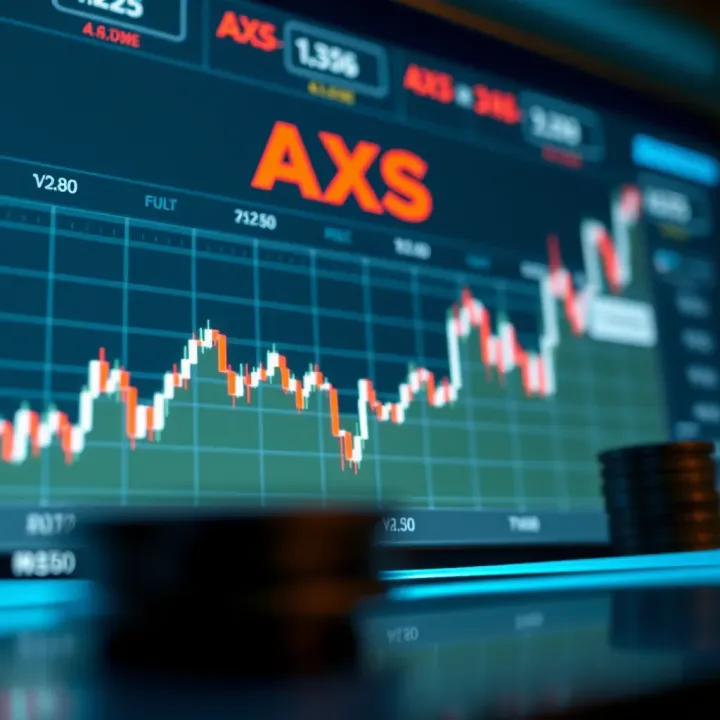
Explore AXS price forecast 🔮, key market trends 📈, expert insights 🧠, and risks ⚠️ to understand Axie Infinity's crypto outlook in coming years.

🌐 Explore Arbitrum's future price trends, key market drivers, expert views, and risks shaping its value in Pakistan's crypto scene. 📈🚀
Based on 8 reviews